Budget Dual Battery Setup for Overlanding: A Complete How-To Guide
This post contains affiliate links. As an Amazon Associate, I earn from qualifying purchases at no extra cost to you.
Running a fridge, camp lights, and a USB hub off one starting battery is a fast track to a dead rig at the worst possible moment. A dual battery setup is one of the upgrades I keep recommending to newer overlanders because the payoff-to-cost ratio is hard to beat - you get true off-grid power without a generator, and a properly wired system protects your starting battery no matter how long you camp. I built my first budget dual battery setup for right around $350 in parts, and it has run reliably through two seasons of weekend trips and a pair of 10-day runs in the desert.
Safety Note: This project involves live 12V wiring and connections to your vehicle’s main electrical system. Disconnect the negative terminal of your primary battery before running any new cabling. If your vehicle has supplemental restraint system (SRS) backup power near the battery - common on newer trucks and SUVs - consult the factory service manual before working in that area. Route all new wiring away from exhaust components, sharp edges, and moving parts, and protect runs with split loom conduit secured with cable ties. If you are not comfortable tracing the existing wiring in your engine bay or under your dash, a certified 12V installer is a better use of money than a fried alternator harness or a vehicle fire.
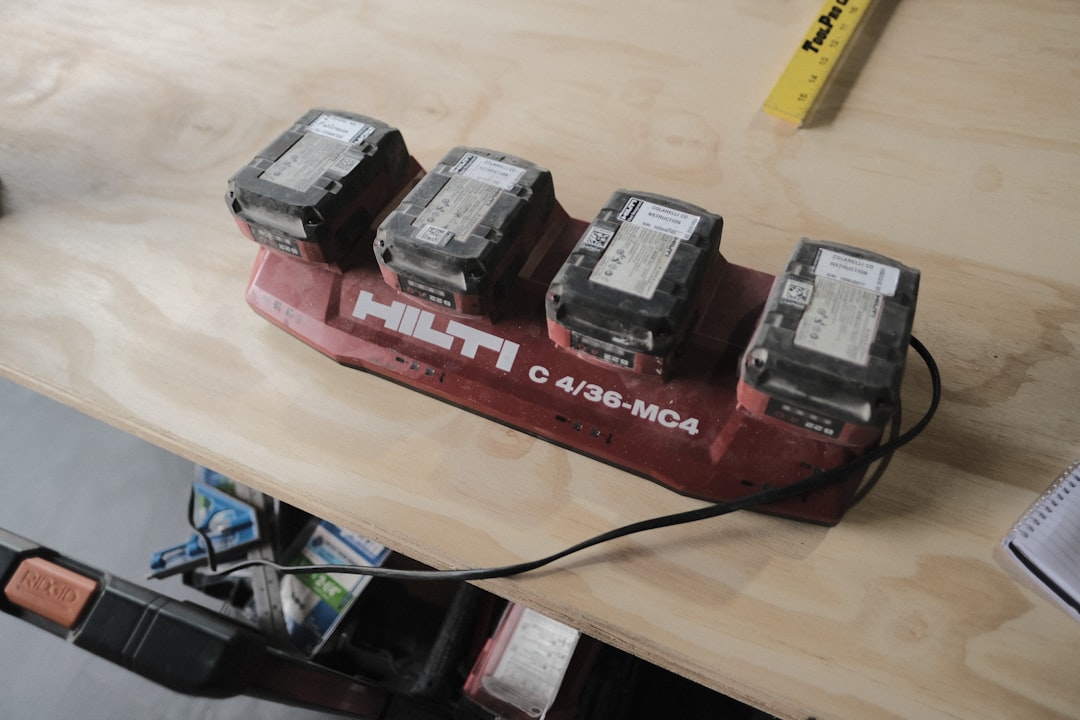
Photo by Dillon Wanner on Unsplash
What a Dual Battery System Actually Does
A dual battery setup pairs a primary starting battery with a dedicated house battery - usually mounted in the engine bay, bed, or cabin depending on your vehicle. The house battery powers accessories like fridges, lighting, phone chargers, and air compressors while you are camped. When the engine runs, an isolator automatically charges the house battery without risking the start battery. When the engine is off and your fridge is running overnight, any drain stays on the house battery and leaves your start battery ready to fire the engine in the morning.
The isolator is the critical piece. It prevents the house battery from being drawn down into the start battery and vice versa. Without one, you are just paralleling two batteries, which means a dead fridge battery also means a dead start battery.
Choosing the Right Battery for the House Bank
The most important decision in a budget dual battery setup is the house battery chemistry. You have three realistic options at budget price points:
Flooded Lead-Acid (FLA): Cheapest upfront, usually $80-120 for a 100Ah group 27. Heavy, requires ventilation to outside air (hydrogen off-gassing), and needs to be mounted upright. Not my first choice for a cab install, but workable in a bed or under-hood position with a vented battery box.
AGM (Absorbed Glass Mat): I use AGM for most budget builds. A 100Ah AGM runs $130-200, handles vibration better than FLA, can be mounted in any orientation, and does not off-gas under normal conditions. Sealed AGM batteries are the most common house battery choice for truck and SUV overland rigs. You can find 100Ah AGM batteries on Amazon in the $130-180 range from brands like Renogy, VMAXTANKS, and Battle Born’s entry line.
Lithium (LiFePO4): Better cycle life and weight savings, but $300-450 for 100Ah even on budget options. Harder to justify until you have proven you actually overland regularly. I would buy AGM first, run it for a season, and upgrade to lithium if you’re doing more than 15-20 days per year.
For most budget builds, a 100Ah AGM is the sweet spot: enough capacity to run a 40-50 liter fridge for 24-36 hours without recharging, and enough headroom for lights and USB charging on top.
Picking Your Isolator: The Three Real Options
The isolator is what makes a dual battery system a system rather than just two batteries bolted in. Here is what the budget options actually look like:
Simple Relay Isolator (VSR)
A Voltage Sensing Relay - also called a Battery Isolator Relay or VSR - costs $20-50 and is the most common budget option. It monitors the voltage on the primary battery and closes a relay to connect the house battery once charging voltage is detected (usually around 13.3V). When voltage drops below threshold (alternator off, engine stopped), the relay opens and isolates the banks.
VSRs work fine. Their limitation is that they charge both batteries at the same voltage, which is acceptable for two identical batteries but not ideal for mixing chemistries. If you are running two matched AGM batteries, a VSR is a perfectly valid budget choice. Dual battery isolator relays are available for $25-45 from brands like CTEK, Renogy, and generic imports that work reliably.
Battery-to-Battery (B2B) Charger
A B2B charger is smarter than a VSR: it uses DC-DC conversion to charge the house battery at the correct profile for its chemistry regardless of what the alternator is doing. This matters if you have a newer vehicle with a smart alternator (very common on vehicles made after 2010-2012) that varies voltage. Smart alternators can confuse VSRs into thinking the engine is off and failing to charge the house battery.
A quality B2B charger like the REDARC BCDC1225D runs $180-220, which is the most expensive single component in a budget build. If your vehicle has a smart alternator - check your factory service manual or a forum specific to your platform - a B2B charger is worth the extra cost. I found this out the hard way on a 2017 Tacoma where my VSR was barely charging the house battery until I swapped to a B2B.
ACR (Automatic Charging Relay with Combiner)
Blue Sea Systems makes the ML-ACR, which bridges the two batteries for faster combined charging when the engine runs but isolates them when it stops. It is simpler than a B2B and more robust than a cheap VSR. At around $80-100, it sits in the middle of the price range. Blue Sea Systems publishes solid technical documentation on dual battery management on their site - their ACR application guide is worth reading before you wire anything.
For a true budget build on a pre-2012 vehicle with a conventional alternator, a quality VSR at $35-45 gets the job done. On anything newer, budget for a B2B charger.
Wiring the System: Cables, Fusing, and Routing
Wiring is where budget builds go wrong most often. Undersized cable creates voltage drop and heat. Skipping fusing creates fire risk. Neither is acceptable.
Cable Sizing
For a 100Ah house battery being charged at 25-40 amps through an isolator, 4 AWG welding cable is the minimum I would run for runs under 10 feet. For longer runs from the engine bay to a bed-mounted battery - often 12-18 feet in a full-size truck - go to 2 AWG. Welding cable is more flexible than automotive wire and cheaper than marine-grade tinned cable, and it works fine for this application.
Fusing
Every cable run from a battery must be fused as close to the battery terminal as possible. Use an ANL fuse holder with a 40-60A ANL fuse for the isolator cable, and a separate ANL or MIDI fuse for any high-draw accessory circuits. Blade fuse holders are acceptable for low-draw circuits (under 30A). Never run unfused wire from any battery terminal.
Routing
In my experience, the cleanest runs use existing grommets and pass-throughs to get cable from the engine bay to the cabin or bed. Zip tie cables to existing harnesses every 12-18 inches. Keep runs away from the exhaust, turbo, and any heat sources. Cover any run within 12 inches of a heat source with heat-resistant loom, not just standard split loom.
Installing the House Battery: Common Mount Locations
Engine bay second battery tray: The easiest location on many trucks and SUVs. Brackets for common platforms - Tacoma, F-150, 4Runner, Wrangler - are available for $50-100 and bolt directly to existing mounting points. Short cable runs, easy access, no cabin penetration needed.
Bed-mounted battery box: More flexible and allows a larger battery. A metal battery box bolted to the bed floor with a proper tie-down keeps the battery secure and protected. I prefer a lockable steel box for any bed install.
Behind the rear seat or under a seat: Common in Tacoma double cabs and similar. Keeps weight centered but requires running cable through the firewall or body. Make sure the battery is properly secured and ventilated if using FLA chemistry.
Adding a Battery Monitor
A battery monitor is a small but important addition to any dual battery setup. A basic voltage display - $15-25 on Amazon - tells you the state of charge at a glance. More capable monitors from Victron or REDARC show amp-hours consumed, charge current, and estimated runtime, but they cost $60-120. For a budget build, a simple dual-display voltmeter showing both battery voltages is enough to manage your power correctly.
Mount the monitor somewhere visible - I put mine on a small panel next to the driver’s seat. Knowing your battery voltage before bed tells you whether you can run the fridge another 8 hours or whether you need to start the engine for 20 minutes to top up.
What a Complete Budget Build Costs
Here is a realistic parts breakdown for a budget dual battery system:
- 100Ah AGM battery: $140-180
- VSR isolator relay: $30-45
- 4 AWG cable (10 feet), lugs, heat shrink: $25-35
- ANL fuse holder and 60A fuse: $15-20
- Battery tray or mount hardware: $50-80
- Split loom conduit, cable ties, zip screws: $15-20
- Dual voltmeter display: $18-25
Total: $293-405 depending on your vehicle and where you source parts. If you already have cable tools and a battery from another project, you can get into a working system for under $250.
As part of a broader build, this pairs well with the electrical considerations I covered in how to build an overland rig for under $2,000 - the dual battery line item fits neatly into that budget if you prioritize it early.
Common Mistakes to Avoid
Skipping the fuse is the most dangerous mistake. The second is buying a battery that is mismatched to the isolator chemistry profile - if you buy a lithium battery, get a B2B charger that has a LiFePO4 charge profile, not a VSR.
Running undersized cable is the third common mistake, and it shows up as a warm cable after 30 minutes of fridge runtime - which means resistive heating, voltage drop, and eventually a failed connection. Size up, not down.
FAQ
What size battery do I need for a dual battery setup?
For most overlanders running a 40-50 liter fridge plus lights and USB charging, 100Ah AGM is the practical minimum. That gives you roughly 24-36 hours of fridge runtime before needing to recharge, assuming you are not running the fridge above 50% draw continuously. If you run a larger fridge, a winch, or a CPAP machine, size up to 120-150Ah.
Can I use my existing starting battery as the house battery?
In most cases, no. Starting batteries are designed for short, high-current bursts to start the engine, not sustained low-current draws over hours. Using a starting battery as a house battery shortens its life significantly. You want a deep-cycle or dual-purpose battery for the house bank.
Do I need a dual battery setup if I just run USB chargers and a few lights?
Probably not for lights and USB only - the draw is low enough that a full-size starting battery handles it fine for weekend trips. The calculus changes when you add a 12V fridge, which draws 3-6 amps continuously. That is where a house battery earns its cost.
Will a dual battery setup charge properly with a newer smart alternator?
Not with a basic VSR. Smart alternators vary output voltage to manage fuel economy and battery health, and a VSR may interpret reduced voltage as “engine off” and fail to charge the house battery. If your vehicle was made after 2011-2012, research whether it has a smart alternator before choosing an isolator. A DC-DC B2B charger solves this problem completely.
Is this a one-day install?
For most vehicles, yes. Plan for 3-5 hours if you are routing cable from engine bay to bed or cabin. If you are installing a second under-hood battery in a provided second-battery tray, it can be done in 90 minutes. Have all parts, tools, and a wiring diagram ready before you start.
Related Reading
- How to Build an Overland Rig for Under $2,000
- Best Recovery Gear for Budget Overlanders
- DIY Skid Plate Options for Budget Builds
If you are building out your rig from scratch, the complete budget overland build guide is the best place to see how the dual battery system fits into the overall budget and build order.