Winter overlanding: cold-weather camping prep on a budget
Winter overlanding is often portrayed as a rich man’s game. If you scroll through social media, you will see $5,000 diesel heaters, $3,000 hardshell rooftop tents with insulated liners, and bespoke electrical systems that cost more than a used Jeep. This narrative suggests that unless you have a massive budget, you should stay home until the spring thaw. That is wrong. Cold weather camping is not about how much money you throw at the problem; it is about how well you manage thermodynamics and moisture. You do not need a heated rig to be comfortable in twenty degree weather. You need a solid understanding of R-values, a commitment to ventilation, and a few key pieces of gear that provide the best durability per dollar. In our experience, the right approach makes all the difference.
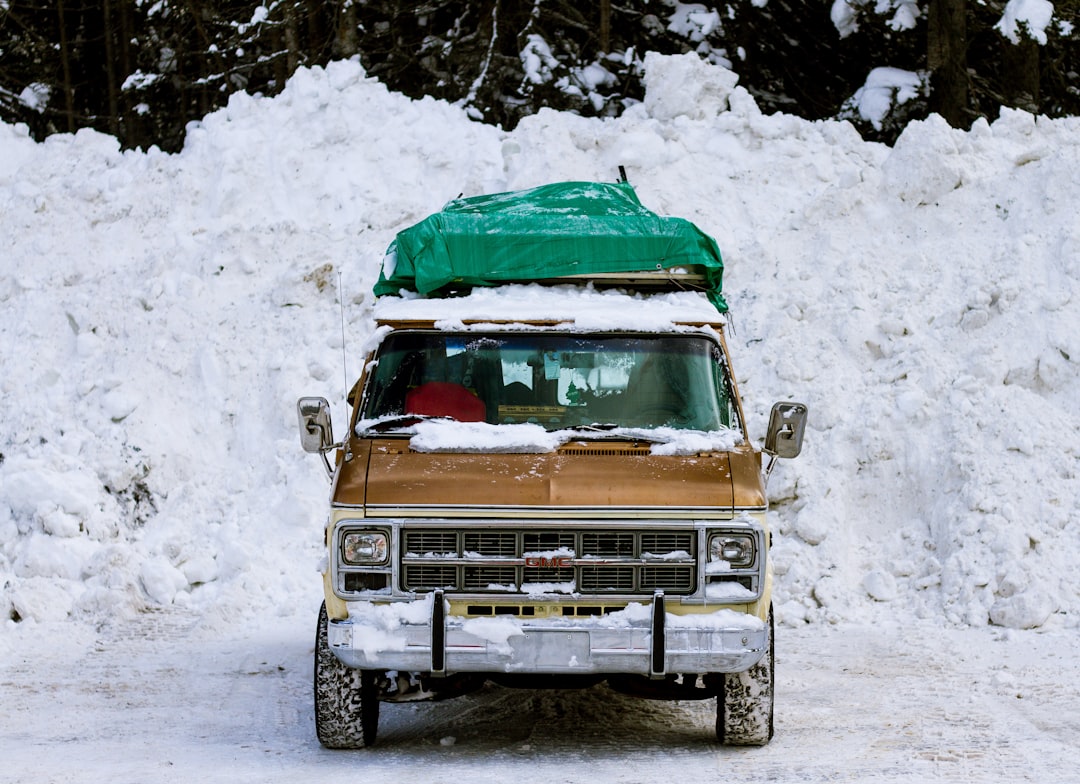
Photo by Jacky Zeng on Unsplash
The Budget Insulated Sleep System Strategy
Your sleep system is the most critical component of your winter setup. If your vehicle breaks down or your heater fails, your sleeping bag and pad are your final line of defense against hypothermia. Many beginners make the mistake of buying a massive, expensive sleeping bag while ignoring what is underneath them. In winter overlanding, the ground or the metal floor of your vehicle is a heat thief. It will suck the warmth right out of your body through conduction. You must prioritize your sleeping pad just as much as your bag.
For a budget-friendly but high-performing setup, I recommend the Klymit Static V Insulated Sleeping Pad. At around $80, it offers an R-value of 4.4, which is the bare minimum you should consider for four-season use. R-value measures a material’s resistance to heat flow. In the summer, an R-value of 1 or 2 is fine, but when the mercury drops below freezing, you need that 4.4 rating to keep your body heat from escaping into the cold surface below you. If you are sleeping in a rig with a DIY platform, you can augment this by adding a layer of cheap closed-cell foam or even a moving blanket underneath the pad.
Once the insulation from the ground is handled, you need a bag that actually lives up to its rating. Be wary of “survival ratings” on cheap bags. If a bag says it is rated for zero degrees, that usually means you will survive the night, not that you will be comfortable. For a budget-conscious overlander, the TETON Sports Celsius XXL Sleeping Bag is a workhorse. It is usually priced under $100 and provides a massive amount of loft. Because it is a rectangular bag, it is less efficient than a mummy bag, but it allows you to wear extra layers or even tuck a hot water bottle into the foot box without feeling constricted.
To make a budget sleep system work like a premium one, you should also focus on layering. Instead of buying one $500 down bag, use a $100 synthetic bag and add a fleece liner or a heavy wool blanket on top. This creates air pockets between the layers that trap heat more effectively than a single thick layer. Always change into completely dry clothes before getting into bed. Even a small amount of sweat from setting up camp will turn into a refrigerator once you stop moving.
Managing Condensation and Airflow
The biggest irony of winter overlanding is that your own breath is your worst enemy. Every time you exhale, you release moisture into the air. In a confined space like a truck cab or a small tent, that moisture hits the cold walls, turns back into liquid, and starts “raining” on your gear. By 3:00 AM, your sleeping bag is damp, and by 6:00 AM, you are shivering. Many people respond to the cold by sealing every window and vent, which is exactly the opposite of what you should do.
You must maintain airflow, even when it is freezing outside. Cracking two windows about half an inch creates a cross-breeze that allows moist air to escape before it can condense. If you are worried about snow or rain getting in, look into window rain guards for your vehicle. They are a cheap modification that allows you to keep the windows cracked in any weather.
Another budget-friendly way to manage moisture is using desiccant packs or “DampRid” buckets, though these have limited effectiveness in extremely cold temperatures. A better approach is to use a 12V fan to keep air circulating. You do not need a high-end system for this. A simple USB-powered fan plugged into a portable power bank will move enough air to prevent stagnant pockets of moisture from forming in the corners of your rig.
If you wake up and find frost on the inside of your windows, you failed at ventilation. That frost will melt as soon as the sun comes up or you start the engine, soaking your dashboard and bedding. Carry a dedicated micro-fiber towel to wipe down the interior glass before it melts. This prevents the moisture from staying in the vehicle and causing mold issues later. If you are using a rooftop tent, the same rules apply: keep the top vents open. It sounds counter-intuitive to let cold air in, but a dry -10 degree sleeping bag is much warmer than a wet -10 degree sleeping bag.
Vehicle Health and Winter Fluids
Your vehicle faces unique stresses during winter overlanding that do not exist in the summer. Battery capacity drops significantly as the temperature falls. A battery that starts your truck perfectly in July might click and die in January. Before heading out, use a multimeter to check your battery’s resting voltage. If it is under 12.4V, it is time to replace it or at least bring a portable jump starter.
Fluids are another concern. If you are heading into sub-zero territory, ensure your engine coolant is mixed to the correct ratio for the expected lows. Standard 50/50 mixes are usually good to -34 degrees Fahrenheit, but if you have been topping off with water during the summer, your freezing point might be much higher. Also, switch to a winter-grade windshield washer fluid. There is nothing more dangerous than hitting a patch of salty slush and realizing your washer fluid has frozen in the lines, leaving you with a white-out windshield.
SAFETY WARNING: If you use any type of portable heater inside your vehicle or tent, such as a propane “Buddy” heater, you must use a battery-operated Carbon Monoxide (CO) detector. Even heaters marketed as “indoor safe” can malfunction or deplete oxygen in small, unventilated spaces. Never sleep with a propane heater running. Use it to warm the space before bed and again when you wake up, but keep it off while you are asleep. If you experience a headache, dizziness, or nausea, turn off the heater immediately and get into fresh air.
Fuel management is also different in the winter. Diesel owners need to be particularly careful about “gelling,” where the paraffin wax in the fuel crystallizes and clogs the filters. Use a fuel additive like Power Service Diesel Supplement (the white bottle) to prevent this. For gasoline engines, keep your tank as full as possible. A near-empty tank has more room for condensation to form on the interior walls, which can lead to ice in the fuel lines. If you are planning a long trip, check out our Budget Overland Air Compressor Guide to ensure you can adjust tire pressures for snowy trails, as cold air will naturally lower your PSI.
Cooking and Hydration Logistics
Eating and drinking in the winter requires a shift in strategy. You burn significantly more calories just staying warm, so “camp food” needs to be high in fat and protein. However, the actual process of cooking becomes harder. Standard butane canisters, the kind used in many cheap backpacking stoves, perform poorly in the cold. The pressure drops as the liquid inside the canister fails to vaporize.
If you are on a budget, stick to propane. Propane has a much lower boiling point than butane, meaning it will continue to flow even in sub-zero temperatures. A basic single-burner propane stove is reliable and cheap. To maximize efficiency, keep your fuel canisters inside the vehicle or even in your sleeping bag overnight so they start warm. When cooking, use a windbreak. Wind strips heat away from your pot much faster in the winter, wasting fuel and making you wait longer for your meal.
Hydration is the most overlooked part of winter overlanding. You do not feel as thirsty when it is cold, but the dry winter air dehydrates you with every breath. Keeping water liquid is the challenge. If you leave a plastic gallon jug on your floorboard overnight, it will be a solid block of ice by morning. Store your water in insulated containers, or wrap your water jugs in spare clothing or blankets.
A pro tip for budget winter camping is to fill a high-quality Nalgene bottle with boiling water right before bed. Wrap it in a sock and toss it into the bottom of your sleeping bag. It acts as a space heater for your feet for 4 to 6 hours, and in the morning, you have liquid water that isn’t frozen for your coffee. This dual-purpose hack is much cheaper than buying electric blankets or heated vests.
Budget Gear Hacks for Staying Warm
You do not need to buy every “overland” branded accessory to stay warm. Some of the most effective winter gear can be found at hardware stores or in your kitchen pantry. For example, Reflectix (the silver bubble wrap insulation) is an incredible budget tool. You can cut pieces to fit your vehicle windows exactly. This does two things: it provides a radiant barrier that keeps heat inside and it acts as a blackout curtain for privacy. A roll of Reflectix costs under $25 and provides more thermal protection than many expensive window covers.
Another essential budget item is a 10-pack of Hot Hands Hand Warmers. These are not just for your gloves. If you find yourself shivering in the middle of the night, activate two of these and place them near your femoral arteries (your groin area) or under your armpits. This warms the blood circulating through your body much faster than just holding them in your hands. At under $1 per pair, they are the cheapest insurance policy you can carry.
Lighting is also a factor in winter because the days are so short. You will spend a lot more time in the dark than you do in the summer. Make sure your lighting is up to the task. We have previously covered the Best Overlanding Headlamps Lighting Under 75, and having a reliable, cold-resistant headlamp is mandatory for those 5:00 PM sunsets.
Finally, consider your footwear. You do not need $300 mountaineering boots. A pair of oversized waterproof boots combined with thick wool socks will do the trick. The “oversized” part is key. If your boots are too tight, they compress the socks and restrict blood flow, which leads to cold feet regardless of how expensive the boots are. Always carry a spare pair of dry socks in a waterproof bag; if you step in a deep slush puddle, your day is over unless you can get into dry gear immediately.
Winter Gear Comparison: Budget vs. Premium
| Feature | Budget Option | Premium Option | Why the Budget Option Works |
|---|---|---|---|
| Primary Insulation | TETON Sports Celsius XXL | $600 Down Mummy Bag | Heavy, but provides massive loft and room for layers. |
| Ground Barrier | Klymit Static V Insulated | $250 Therm-a-Rest NeoAir | 4.4 R-value is sufficient for most US winter trails. |
| Auxiliary Heat | Hot Hands 10 Pack | $1,500 Webasto Diesel Heater | Zero installation required; portable and reliable. |
| Window Insulation | DIY Reflectix Cutouts | $400 Custom Thermal Blinds | Costs $20 and offers 90% of the same thermal benefit. |
| Water Storage | Insulated Cooler (No Ice) | $200 Rotomolded Water Tank | A cheap cooler keeps items from freezing just as well as it keeps them cold. |
Common Mistakes and Troubleshooting
One of the most common mistakes in winter overlanding is over-dressing inside the sleeping bag. It sounds logical: if it is cold, wear everything you own. However, if you wear a heavy parka inside a high-quality sleeping bag, your body heat cannot escape to warm the air inside the bag. You end up with “cold spots” and restricted circulation. The best approach is a thin, high-quality base layer (merino wool is king) and a clean pair of socks. If you are still cold, drape your heavy coat over the outside of the bag rather than wearing it inside.
Another mistake is neglecting your recovery gear. Snow and ice change the recovery game entirely. A jack that works on dry dirt might slip dangerously on ice. If you are looking at your options, read our guide on the Best Value Off Road Jack Options Compared to understand which tools handle unstable surfaces better. Also, remember that winching in the winter puts immense strain on your battery. Always have the engine running and at a high RPM when winching to ensure the alternator is providing maximum support.
If you get stuck and have to spend an extra night out, your priorities shift to calorie management and staying dry. If your vehicle will not start, do not keep cranking it until the battery is flat. Try once or twice, then stop and evaluate. If it is a fuel gelling issue, you might need to wait for the sun to hit the engine bay or use a heat source carefully. If you are forced to stay put, check your Overland First Aid Kit for emergency blankets and fire-starting supplies. A small fire can be a lifesaver, but never build one too close to the vehicle or on top of deep snow where it will eventually sink and extinguish itself.
Winter Overlanding FAQ
Can I use a regular air mattress for winter camping?
No. A standard vinyl air mattress is a heat sink. The large volume of air inside the mattress will equalize with the outside temperature, and since there is no insulation (like the synthetic fill found in the Klymit Static V Insulated Sleeping Pad), it will pull heat away from your body all night. You will be cold even with a zero-degree bag. If you must use one, you need at least two inches of closed-cell foam on top of the air mattress to create a thermal break.
How do I keep my lithium power station from dying?
Lithium batteries (LiFePO4) cannot be charged below freezing without damaging the cells. Most budget power stations do not have internal heaters. To keep yours functional, keep it in the passenger footwell while driving so it stays warm. At night, keep it inside your sleeping bag or wrapped in a heavy blanket. If the battery is too cold to discharge, it won’t power your fridge or fan. Always check the operating temperature range of your specific unit before relying on it for a winter trip.
Is it safe to sleep in a vehicle with the engine running for heat?
It is generally discouraged and should only be a last resort. The risk of carbon monoxide poisoning is high, especially if snow blocks your exhaust pipe or if there are undiagnosed leaks in your exhaust system. If you must do this to survive, ensure the exhaust is completely clear, crack the windows significantly, and use a CO detector. It is far safer and more fuel-efficient to invest in a proper sleep system than to rely on an idling engine for warmth throughout the night.
Conclusion
Winter overlanding is a rewarding experience that offers solitude and landscapes you simply cannot see in the summer. You do not need a massive budget to participate; you just need to be smarter than the cold. By focusing on a high R-value sleep system, managing your rig’s moisture through proper ventilation, and using simple hacks like hot water bottles and Reflectix, you can stay comfortable in truly harsh conditions. Don’t let the “gear-shaming” of high-end builds keep you off the trails. Prep your rig, pack your wool socks, and get out there.
Check your tire pressures and battery health one last time before you leave the driveway.
Related Reading:
Enjoyed this guide? Bookmark it for later or share it with a friend who might find it useful.