Overlanding campsite etiquette and Leave No Trace basics
The rapid explosion of overlanding has a dark side that many veterans are hesitant to talk about: the permanent closure of our favorite trails. Land management agencies like the BLM and Forest Service do not close gates because they hate fun; they close them because people are destroying the resource. If you think your right to explore outweighs your responsibility to the land, you are the reason we are losing access. Overlanding campsite etiquette and Leave No Trace basics are not just polite suggestions for the weekend warrior. They are the survival manual for our hobby. When you pull your rig into a dispersed site, you are an ambassador for every person with a lift kit and a rooftop tent. If you leave a mess, the entire community pays the price.
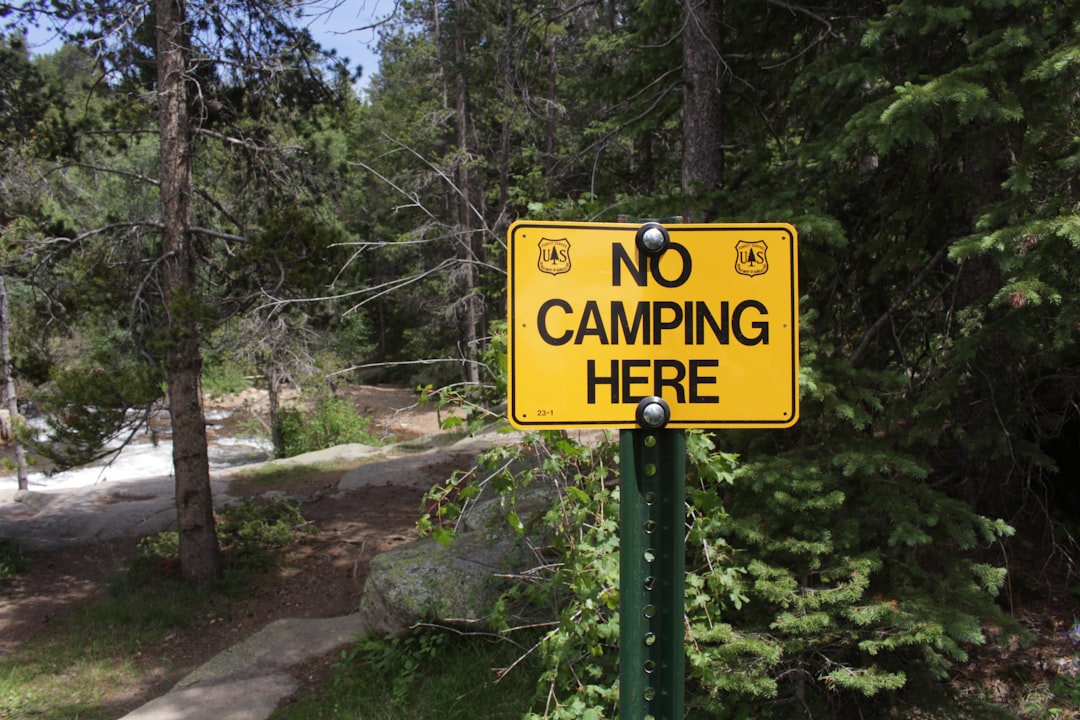
Photo by Jadon Kelly on Unsplash
Overlanding Campsite Etiquette: Surface Travel and Access Rules
The most fundamental rule of overlanding etiquette begins before you even put your vehicle in park. It starts with where you choose to drive and where you choose to stop. Staying on the trail is the absolute bare minimum, yet we see “social trails” popping up everywhere. These are the small offshoots where someone decided they wanted a slightly better view or a more level spot to park, so they drove over virgin brush or cryptobiotic soil to get there. Once one person does it, the next ten follow, and suddenly a pristine meadow is a muddy parking lot. This is how trails get decommissioned.
5 Surface Travel Rules Every Overlander Must Follow
- Check the Motor Vehicle Use Map for your specific national forest or BLM field office before leaving the trail — it shows exactly which roads are open to your vehicle class.
- If the trail is wet or soft enough to leave ruts deeper than a boot heel, turn around. Rutted trails channel water, accelerate erosion, and trigger closures.
- Assess site size before committing. If your rig cannot fit within the existing hardened footprint, move to the next site — do not expand the perimeter.
- Never bypass an obstacle by driving around it through undisturbed ground. If you cannot clear it, either remove it safely or find a different route.
- Keep all four tires inside the established site boundary at all times, including when parking, maneuvering, and staging gear.
When you are looking for a campsite, your goal should be to find a spot that has already been impacted. Look for existing fire rings and hardened ground where the vegetation is already gone. Do not expand these sites. If the site is too small for your full sized truck and trailer, do not drive over the surrounding grass to make it fit. Keep your tires on the established footprint. In high desert environments, this is even more critical. Living soil crusts can take decades or even centuries to recover from a single tire track. If you cannot find a spot that fits your rig without destroying new ground, keep driving.
The same logic applies to mud. If the trail is so soft that you are leaving deep ruts, you should not be there. Ruts channel water, which leads to massive erosion that makes trails impassable for anything but the most built rigs. Eventually, the Forest Service sees the damage and simply locks the gate. Being a responsible overlander means having the discipline to turn around when the conditions are not right. It also means avoiding the temptation to bypass obstacles by driving around them. If you cannot clear a rock or a fallen log, do not create a new path through the trees. Either clear the obstacle or find a different route. Your ego is not worth a trail closure.
Trash Management and the Reality of Packing It Out
There is no “trash service” in the backcountry. This seems obvious, but the amount of micro-trash left behind at popular sites suggests otherwise. Bottle caps, cigarette butts, and those tiny plastic corners from snack bags are the most common offenders. To manage this effectively on a budget, you need a dedicated system that is easy to use so you actually follow through with it. If your trash bag is buried at the bottom of a drawer, you will be tempted to leave small items on the ground.
A high quality external trash solution is the best investment you can make for land stewardship. While some people spend $100 on name brand spare tire bags, you can get the job done for much less. I recommend the UST Packable Trash Bag for those on a budget. It is a simple, durable, and affordable way to keep your waste contained and outside of your vehicle. It is under $20 and does the job just as well as the boutique options. The key is to make it the first thing you set up and the last thing you pack away.
Beyond your own trash, the “plus one” rule is the gold standard of etiquette. Always leave a campsite cleaner than you found it. This means picking up the shell casings, the broken glass, and the candy wrappers left by the person who stayed there before you. If we all collectively agree to haul out more than we haul in, we can slowly reverse the damage done to high traffic areas. Do not burn your trash in the fire pit. Plastic, foil, and cans do not disappear in a campfire; they melt into a toxic sludge that stays in the soil and attracts wildlife. If you brought it in, it stays in your vehicle until you reach a proper dumpster.
Human Waste and the End of the “Cat Hole” Era
In the early days of overlanding, a shovel and a 6 inch deep hole were the standard. However, the sheer volume of people now hitting the trails has made the traditional cat hole unsustainable in many areas. In high altitude, desert, or high traffic environments, waste simply does not decompose fast enough. Finding “white flowers” (toilet paper) blooming behind every large rock near a campsite is the fastest way to get a dispersed camping area shut down permanently.
| Waste Method | Best For | Cost | Accepted in Restricted/Permit Zones? |
|---|---|---|---|
| Cat hole (6-inch) | Solo use in low-traffic, low-restriction areas | Free | Often prohibited — check local rules |
| WAG bags | High-traffic areas, wilderness permits, desert environments | $3–5 per use | Yes |
| Portable toilet | Multi-day trips, groups, canyon and alpine zones | $100–150 upfront | Yes |
If you are serious about overlanding etiquette, you need to transition to a pack-out system for human waste. This is especially true if you are traveling in a group or staying in one spot for more than a night. For a budget friendly entry point, the Thetford Porta Potti Portable Toilet is a game changer. It usually runs between $100 and $150, which is a small price to pay for the ability to camp anywhere responsibly. It is a self contained system that prevents any waste from touching the ground and makes disposal at a standard RV dump station or even a home toilet simple and sanitary.
If a full portable toilet is too bulky for your build, at the very least, you must use WAG bags. These are puncture resistant bags containing gelling powder that deodorizes and solidifies waste so it can be thrown in the regular trash. Never, under any circumstances, leave toilet paper on the ground or even buried. Animals will dig it up, and the wind will scatter it. If you refuse to use a pack-out system, you are part of the problem that is forcing land managers to implement “permit only” systems for our national forests.
Fire Safety and Backcountry Cooking Etiquette
SAFETY WARNING: Fire is the single greatest threat to our public lands. Before you even think about striking a match, you must check the local fire restrictions for the specific district you are entering. “Stage 1” or “Stage 2” restrictions are common in the summer and often prohibit all wood fires. Ignoring these rules can lead to massive fines, vehicle impoundment, or worse, a catastrophic wildfire. Always carry a fire extinguisher and at least five gallons of water specifically for fire suppression.
When fires are permitted, the etiquette is clear: use existing fire rings. Do not build new ones. If you are in a truly pristine area where no ring exists, consider if you really need a fire at all. If you do, use a fire pan or a portable pit to keep the scorching off the ground. The UCO Flatpack Portable Grill is an excellent budget option for this. It is under $50, folds flat to save space in your rig, and keeps your coals off the sensitive topsoil. It also doubles as a grill, making it a multi-use tool that fits the budget overlander’s ethos.
Regarding firewood, the rule is “buy it where you burn it” or gather it responsibly. Transporting wood across state lines or even between counties can spread invasive pests like the Emerald Ash Borer, which can decimate entire forests. If you are gathering wood, only take “dead, down, and detached” pieces. Never cut limbs off standing trees, even if they look dead. Standing dead wood provides critical habitat for birds and insects. When you are finished, the fire must be “dead out.” This means you should be able to stick your bare hand into the ashes without feeling heat. If it is too hot to touch, it is too hot to leave. Drown it with water, stir the ashes, and drown it again.
Respecting Other Travelers and Shared Spaces
Overlanding is often about seeking solitude, but the reality is that we are sharing these spaces with hikers, mountain bikers, and other campers. Your presence should not diminish their experience. When you are driving past another camp, slow down to a crawl. Nobody wants a cloud of dust settling on their breakfast or their clean gear. A little bit of courtesy goes a long way in preventing the “us vs. them” mentality that often develops between motorized and non-motorized trail users.
If you arrive at a campsite that is already occupied, give them as much space as possible. In the backcountry, “as much space as possible” usually means the next available site half a mile down the trail. Do not pull into the same clearing unless the area is clearly designed for multiple groups or you have asked for permission. If you do have to share a space, keep your footprint compact. This is where your lighting choices matter. Blasting high-lumen light bars into a neighbor’s tent at 10:00 PM is a surefire way to be the most hated person on the trail.
When it comes to dogs, etiquette is non-negotiable. Even if your dog is friendly, they should be under your control at all times. Wildlife does not know your dog is friendly; they see a predator. Other campers might have dogs that are reactive or simply don’t want a strange animal running through their kitchen. For more on managing your pets responsibly, check out our guide on overlanding with dogs gear safety vehicle setup. Keeping your dog contained also prevents them from chasing wildlife or getting into toxic plants, which keeps your trip from ending in an expensive vet bill.
Noise Management and Light Pollution
One of the greatest draws of the wilderness is the silence. Modern overlanding rigs, however, are anything but silent. Between diesel heaters, 12V fridges, and the dreaded portable generator, a modern campsite can sound like a construction zone. While some noise is unavoidable, you should make every effort to minimize it. If you are using a generator, it should be a quiet inverter model, and it should be turned off by 8:00 PM. Better yet, invest in a solar setup so you don’t need a generator at all.
Light pollution is another growing issue. With the affordability of high-output LED lights, many overlanders are turning their campsites into stadiums. This ruins the night vision of everyone around you and disrupts local wildlife. Once you are settled into camp, switch to low-intensity lighting. A warm-colored lantern or a headlamp with a red-light mode is all you really need. If you are looking for affordable options that won’t break the bank, we have a list of the best overlanding headlamps lighting under 75 that are perfect for maintaining camp etiquette.
Common Overlanding Campsite Mistakes That Get Trails Closed
Most trail closures are not caused by a single dramatic incident. They result from dozens of small decisions accumulating over a season until a land manager cannot ignore the damage.
Expanding the campsite footprint. When an established site cannot hold a group, the instinct is to pull forward onto adjacent grass or brush. Every expansion creates a new disturbance zone that does not recover. If the site cannot hold your group as-is, split up or move on.
Burning trash and food waste. Aluminum foil, plastic film, and food scraps do not combust completely. They leave chemical residue in the soil and attract bears, rodents, and ravens to the site, which triggers wildlife conflicts and forces closures at otherwise clean dispersed areas.
Driving roads outside your vehicle class. Every national forest and BLM district publishes a Motor Vehicle Use Map. Driving a full-size truck on a road designated for ATVs causes disproportionate damage and is a federal violation. The US Forest Service Motor Vehicle Use Maps are free and available before every trip — there is no excuse for not checking.
Running generators past 9 PM. This is the fastest path to formal noise ordinances in popular dispersed areas. Once an ordinance is in place, enforcement typically leads to permit requirements or restricted-access windows that affect every user, not just the offenders.
Overlanding Campsite Etiquette FAQ
What is the most important Leave No Trace rule for overlanders? The most critical rule is staying on established trails and durable surfaces. Driving off-trail to create new campsites or bypass obstacles causes permanent damage and leads to trail closures. This matters most in environments containing cryptobiotic soil — the dark, lumpy biological crust common in desert and high-plateau ecosystems. A single tire track through cryptobiotic soil can take 50 to 250 years to recover because the crust is a living community of cyanobacteria, fungi, mosses, and lichens that stabilize the soil and fix atmospheric nitrogen. For an overlander, “durable surface” means existing hardened ground, rock, gravel, or packed dirt where the vegetation is already absent — not grass, moss, or any surface where a track would leave a visible imprint.
Is it okay to burn food scraps or trash in a campfire? No. Trash and food scraps do not burn completely and always leave behind toxic residue that contaminates the soil and attracts wildlife to the campsite. Aluminum foil, most plastics, and tinfoil packaging are the worst offenders — they melt and char but do not combust, leaving a persistent chemical residue in the fire ring. Bears are particularly problematic: they learn to associate fire rings with food, and once a bear is conditioned to approach human campsites, land managers are often forced to close the area or lethally remove the animal. Proper disposal means packing all food waste and packaging into your regular trash for disposal at a facility — not your recycling bin, which does not accept food-contaminated materials. Always pack out everything you brought in.
What should I do if I can’t find an established campsite? If all established sites are full, continue driving until you find a spot that has already been impacted. You can read whether a spot is “already impacted” by looking for bare soil with no live ground cover, existing rock arrangements or ash from previous fires, and compacted earth where vegetation has been absent long enough to leave no root structure. If grass is still present, even if it looks sparse, the site has not been fully impacted and driving on it starts a new disturbance zone. Avoid parking on tall dry grass entirely: in addition to being an LNT violation, it is a genuine fire hazard. Hot catalytic converters and exhaust components can ignite dry grass in minutes, and this is one of the leading causes of vehicle-origin wildfires. If you cannot find an impacted site, the correct answer is to leave the area and camp at a developed campground.
How do I handle human waste in high-traffic areas? In high-traffic or sensitive environments, you should use a pack-out system like a portable toilet or WAG bags. Traditional cat holes are often insufficient for the volume of visitors these areas receive, but the problem goes deeper than volume in desert and alpine environments. Cat holes rely on soil bacteria to decompose waste, and those bacteria are absent or present in insufficient quantities in desert soils and alpine zones above treeline. In these ecosystems, waste buried six inches down can persist for years, contaminating shallow groundwater and creating surface hazards when erosion exposes it. WAG bags are the minimum standard for these areas. The procedure is straightforward: the bag contains a gel powder that solidifies and deodorizes the waste on contact, neutralizing odor and reducing pathogens. Sealed WAG bags go in regular trash cans at any gas station or campground — not pit toilets, which cannot handle solid waste, and not recycling. For groups or multi-day trips, a portable toilet like the Thetford Porta Potti is a cleaner and more practical solution that uses the same dump-station or home-toilet disposal method.