Vehicle Fire Extinguisher Guide: What to Carry and Where to Mount It
This post contains affiliate links. As an Amazon Associate, I earn from qualifying purchases at no extra cost to you.
A vehicle fire on the trail is rare but catastrophic. If it happens fifty miles from cell service, a fire extinguisher is the only thing between a salvageable problem and total loss. Yet most overlanders either carry nothing or grab whatever is on sale without understanding what they’re using.
The good news: you don’t need expensive equipment. A 2.5 lb ABC dry chemical extinguisher costs under $25 and handles 95% of overlanding fire scenarios - electrical fires in engine bays, fuel system leaks, camp stove incidents. Paired with a mounting bracket under $20, you’ve invested under $45 for protection that could save a $15,000–$30,000 rig. This guide walks you through what size to carry, where to mount it, installation, and maintenance.
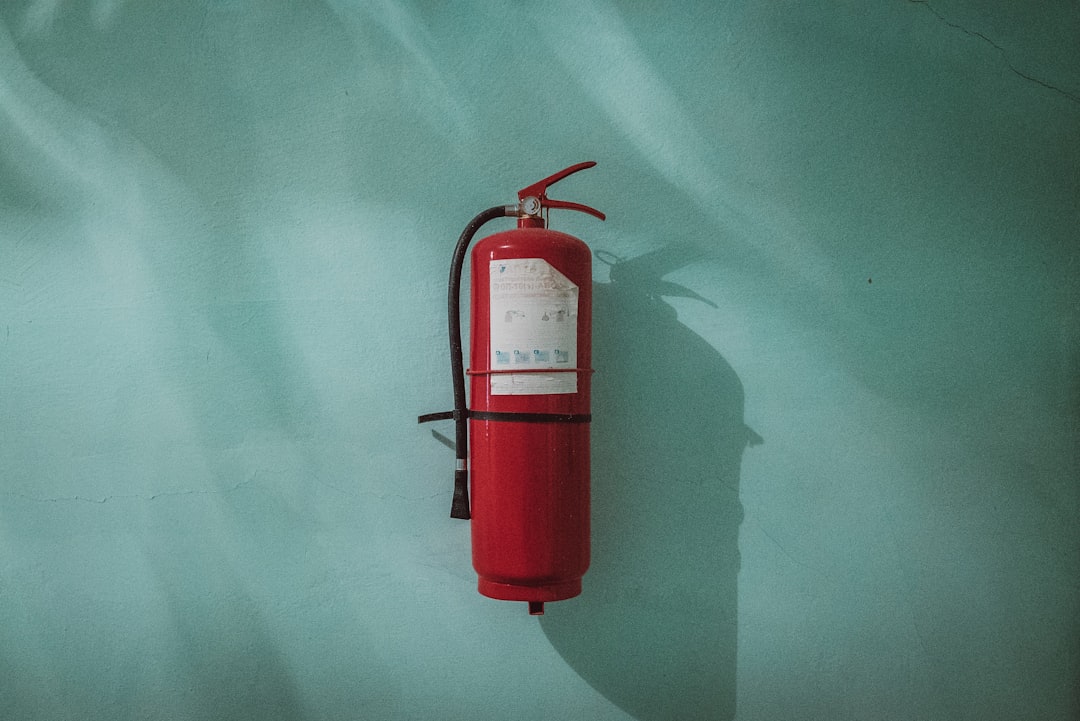
Photo by Piotr Chrobot on Unsplash
Why Your Vehicle Needs a Fire Extinguisher on the Trail
Remote overlanding puts you hours from emergency services. Vehicle fires don’t always roar out of control immediately. Many start small and controllable - a loose battery terminal arcing after bouncing through rocks, a fuel line rubbing through from trail vibration, a camp stove tipped over in the cab, or an electrical short in the fuel pump relay. With a fire extinguisher and 10 seconds of reaction time, you stop the problem at the source. Without one, you watch it spread, then evacuate on foot with whatever you can carry.
Fire extinguishers work. According to NFPA 10 standards, portable fire extinguishers are the first line of defense for incipient fires because they’re fast and effective when deployed correctly. In overlanding, a fire extinguisher gives you agency in a situation where agency is survival.
Budget overlanding means prioritizing gear that’s genuinely useful. A $20–30 fire extinguisher clears that bar completely. It weighs almost nothing (5–6 lbs with bracket and canister), costs less than a good camp chair, occupies minimal space, and requires zero maintenance beyond quarterly pressure checks. Insurance aside, the real argument is simple: someone in your overlanding forum lost a $20,000 truck because they didn’t spend $25 on prevention. You’ll regret not carrying one far more than you’ll regret carrying it.
ABC vs. Other Fire Extinguisher Types: What Overlanders Actually Need
Not all fire extinguishers are the same. The classification system tells you what fuel types each one handles.
| Fire Class | What Burns | Best Extinguisher | Overlanding Relevance |
|---|---|---|---|
| Class A | Wood, paper, cloth, organics | Water, ABC powder | Unlikely in vehicles unless sleeping bag catches |
| Class B | Gasoline, diesel, oil, grease | ABC, foam, CO2 | Very likely - fuel system leaks, oil fires |
| Class C | Energized electrical equipment | ABC powder, CO2 | Common - alternator shorts, fuel pump fires |
| Class D | Magnesium, titanium, lithium | Specialized dry powder | Not relevant to vehicle overlanding |
| Class K | Hot cooking oils | Wet chemical | Not relevant to overlanding |
Your vehicle fire will almost certainly be Class B (fuel system, engine oil) or Class C (electrical short in alternator, battery terminals, wiring). An ABC dry chemical extinguisher handles all three simultaneously. When powder contacts fire, it forms a barrier stopping oxygen while cooling fuel below ignition temperature - effectiveness in seconds.
Why not Class B only? Cost is identical. A Class B-only extinguisher and an ABC extinguisher are the same price ($20–35), so stick with ABC and get full protection.
Other types are unsuitable: Foam is overkill for vehicles ($50–80, messy cleanup). CO2 is expensive ($60–85) and useless on fuel fires. Water-based extinguishers don’t work on electrical fires (electrocution risk) or oil fires. Stick with ABC dry chemical - it’s what commercial fleets, emergency services, and professional garages use.
Sizing Your Fire Extinguisher: 2.5 lb vs. 5 lb for Overlanders
Fire extinguisher size is measured by the weight of dry chemical powder inside. For overlanding, the choice is straightforward.
2.5 lb extinguishers discharge for 8–12 seconds and cover approximately 10–15 square feet of fire spread. That’s enough to knock down a small electrical fire in the engine bay, suppress a fuel line leak, or douse a camp stove incident. The Kidde Pro 210 2.5 lb ABC Fire Extinguisher is the workhorse choice - it costs $20–28, is used in commercial fleets, and appears in thousands of overlanding rigs. Total weight with bracket is roughly 5–6 lbs, negligible for payload.
5 lb extinguishers discharge for 15–25 seconds and cover approximately 15–20 square feet. You get roughly twice the suppression time, which matters if the fire has already begun spreading. However, for 95% of overlanding fires caught in the first 10 seconds, a 2.5 lb is adequate. Fire spreads exponentially once it engulfs a larger area. If you don’t suppress it in 15 seconds, you’re evacuating anyway and letting the rig burn. If you want an upgrade option with more robust construction and a higher-rated discharge, the Amerex B417T 2.5 lb ABC Dry Chemical Extinguisher runs around $35-45 and is trusted in commercial and industrial environments.
Real-world example: A loose battery terminal arcs during a creek crossing. You have 8–10 seconds before ignition begins. A 2.5 lb extinguisher reaches the battery, a 10-second burst of ABC powder smothers the arc and cools the terminal, fire suppressed.
Price comparison:
- 2.5 lb ABC: $20–35
- 5 lb ABC: $35–55
For budget overlanders, 2.5 lb is the obvious choice. Spend the $20–30 saved versus a 5 lb on a good mounting bracket ($15–18) and a first-aid kit ($30–40).
Mounting and Maintaining Your Fire Extinguisher
The best fire extinguisher is worthless if you can’t reach it in a crisis.
Location: Mount it on the passenger side of the cab, between the seat and the door, at waist height. This keeps it away from driver distraction, doesn’t obstruct airbag deployment, and puts it in immediate reach. Height matters - mount it so you can grab the handle without bending.
Never mount it behind the seat, under the seat, in the truck bed, in a latched box, or underneath the vehicle. You need to access it in under 3 seconds without moving other gear.
Use a proper bracket. The Bracketron Universal Vehicle Fire Extinguisher Mount costs $12–18, bolts to the floor with self-tapping screws, and grips the canister with a twist-lock mechanism. Don’t use bungee cords, velcro, or magnets - they fail under trail vibration. A proper bracket distributes vibration load and keeps the canister stable.
Installation (15-minute job):
- Locate the mounting point on the floor just outboard of the passenger seat.
- Test fit the bracket without drilling to confirm door and seat clearance.
- Clean the surface with a wire brush and damp cloth; dry completely.
- Mark the screw holes with a center punch.
- Drill pilot holes using a 3/16” drill bit, perpendicular to the floor.
- Screw the bracket firmly using provided self-tapping screws. Don’t overtighten.
- Twist the extinguisher into the bracket until it locks.
- Tug hard on the canister in multiple directions to confirm it doesn’t budge.
- Test the release mechanism by twisting counter-clockwise with moderate pressure.
If you don’t have a drill, any overlanding shop or mechanic can do it for $20–30.
Before first use: Check the pressure gauge - it should be in the green zone. If it’s yellow or red, the seal failed during storage; return it. Consult the manufacturer operating instructions and memorize the PASS acronym: Pull the pin, Aim at the base of the fire, Squeeze the handle, Sweep side-to-side.
Monthly visual inspection (60 seconds): Confirm the canister is seated firmly in the bracket, there are no dents or corrosion, the pressure gauge is in the green zone, and the safety pin is intact.
Quarterly pressure check (30 seconds): Tap the pressure gauge and confirm the needle is in the green. Gauges can stick - a light tap wakes up a sticking needle. If it’s yellow or red, order a replacement.
Seasonal considerations: In hot climates, check the gauge monthly during summer. In cold climates, check every other month. ABC powder doesn’t freeze, but internal pressure decreases slightly in cold.
After any discharge: Replace the extinguisher immediately. A partially used extinguisher won’t discharge reliably a second time because the internal pressure is compromised.
After 5–10 years: Replace it. The seal weakens over time, especially with temperature swings. A 10-year-old seal that fails in a real emergency is a false economy.
Common Fire Extinguisher Mistakes Overlanders Make
Mistake 1: Buying the cheapest no-name brand. A $8 extinguisher might look pressurized, but it often uses lower-quality powder that clumps, a valve that sticks under pressure, or a seal compromised from the factory. For $15 more, you get Kidde or Amerex with tested reliability. Buy from brands that appear in commercial kitchens and fleet vehicles.
Mistake 2: Mounting it where you can’t reach it in 3 seconds. Under the bed, in a rear locker, or buried under cargo defeats the purpose. You need it in 10 seconds, not after evacuating the cab and digging through a storage box.
Mistake 3: Aiming at the flames instead of the base of the fire. Panicked people spray powder at flames and waste 60% of the discharge on empty air. Aim low at the fuel source and sweep side-to-side. Read the label once right now, not in a crisis.
Mistake 4: Never inspecting it after installation. You bolt it down and never look at it again. Five years later in a real emergency, the seal has failed and the extinguisher won’t discharge. Spend 30 seconds every three months checking the gauge and confirming the bracket is tight.
Mistake 5: Carrying the wrong classification. Stick with ABC. It covers everything, costs the same, and eliminates guessing in a crisis.
Mistake 6: Over-tightening the mounting bracket. This can strip threads in thin sheet metal. Snug the bolts firmly and stop. Over-tight bolts cause the bracket to distort and the extinguisher to bind in release.
FAQ
Q: Is a 2.5 lb extinguisher really enough for a vehicle fire?
A: Yes, for the fires you’re likely to encounter in the first critical seconds. Vehicle fires from electrical shorts, fuel leaks, or overheated engine components are small and localized initially. A 2.5 lb ABC extinguisher discharges for 8–12 seconds and covers the entire surface area of a typical engine bay. If you catch a fuel leak or electrical fire in the first 10 seconds, a 2.5 lb is absolutely sufficient to suppress it completely. The extinguisher is designed for early intervention, which is where 95% of overlanding fires will be caught.
Q: Should I carry two fire extinguishers?
A: For basic overlanding, one 2.5 lb is sufficient and standard across commercial fleets and emergency vehicles. Some overlanders carry two as redundancy for personal peace of mind, and there’s nothing wrong with that. Two 2.5 lb extinguishers cost $50 combined and together handle twice the surface area and discharge time, which is mathematically overkill for the actual risk. For a personal rig, one is plenty. Most overlanders will carry their extinguisher for 10 years and never use it once.
Q: What’s the difference between dry chemical and powder extinguishers?
A: They’re the same thing. “Dry chemical” refers to extinguishers that use powdered chemicals instead of liquid foam or pressurized gas. ABC extinguishers use dry chemical powder - each letter represents a fuel class that the powder suppresses. Don’t confuse dry chemical with specialized “dry powder” extinguishers used for Class D (metal) fires like magnesium or lithium, which are unnecessary for vehicles. If you see “dry chemical ABC extinguisher,” that’s exactly what you want.
Q: Can I use an old fire extinguisher from my garage?
A: Only if it’s still pressurized and in good mechanical condition, which is rare. Check the gauge - if it’s in the green zone and the canister has no visible rust or dents, it might be usable. But if it’s been sitting for 5+ years, the internal seal is likely compromised. You won’t know until you try to use it in a real emergency, which is the worst time to discover it doesn’t work. A $25 new extinguisher is cheaper than the risk. When in doubt, replace it.
Q: Do I need professional inspection or certification?
A: Not required by law for personal vehicles. Professional inspection is required annually only for commercial vehicles and industrial settings. A visual check of the canister (no dents or damage), a pressure gauge check (needle in green), and a bracket tug test are sufficient for personal overlanding. You don’t need a fire safety technician to certify that your extinguisher is ready.
Q: Where do I refill or dispose of a used fire extinguisher?
A: Some fire safety dealers, HVAC shops, and industrial suppliers offer refill and hydro-testing services for $15–35. However, for budget overlanders, replacement is usually simpler. A new 2.5 lb ABC costs $20–30. If you’ve used your extinguisher, replace it and be certain the new one works when you need it. Used extinguishers have uncertain history, so spend $25 on confidence.
Conclusion
A vehicle fire on the trail is survivable if you’re prepared. A 2.5 lb ABC dry chemical fire extinguisher costs $20–30, bolts down in 15 minutes using a $15 mounting bracket, and requires nothing but 30-second quarterly pressure checks to stay ready. It’s cheap insurance that occupies no real space and weighs almost nothing. For budget overlanders, it clears the cost-benefit bar completely.
Your next step is simple: grab a Kidde Pro 210 2.5 lb ABC Fire Extinguisher and a Bracketron Universal Vehicle Fire Extinguisher Mount, spend 15 minutes installing it this weekend, and move on. One $45 investment and you’re protected from a scenario that could otherwise be catastrophic.
Bookmark this guide and share it with your overlanding crew.