DIY Skid Plate: Materials, Templates, and Fitment
This post contains affiliate links. As an Amazon Associate, I earn from qualifying purchases at no extra cost to you.
Skid plates are the difference between a dented pan and a running engine after you hit a rock on the trail. Every offroad rig needs undercarriage protection, but skid plate kits from manufacturers can run $300–$800 depending on your vehicle. Building your own DIY skid plate cuts that cost to $75–$200 in materials and a weekend of work, and you’ll end up with something tougher and more customized than most commercial options.
The secret is picking the right material for your use case, laying out a solid template before you cut anything, and bolting it on with fasteners that won’t shake loose. Most overlanders either skip undercarriage protection entirely or overpay for a name-brand kit when a simple steel or plastic plate does the job just as well. This guide walks you through material selection, template creation, and installation so you can protect your engine, transmission, and fuel tank without breaking the budget.
If you’re starting fresh on a tight budget, pick up the UHMW Polyethylene Sheet 1/4” Thick (around $35–$45) for rear differentials and fuel tank protection - it’s impact-resistant, won’t rust, and cuts with basic tools. For engine protection on vehicles that see real rock crawling, you’ll want steel or aluminum. Let’s break down how to do this right.
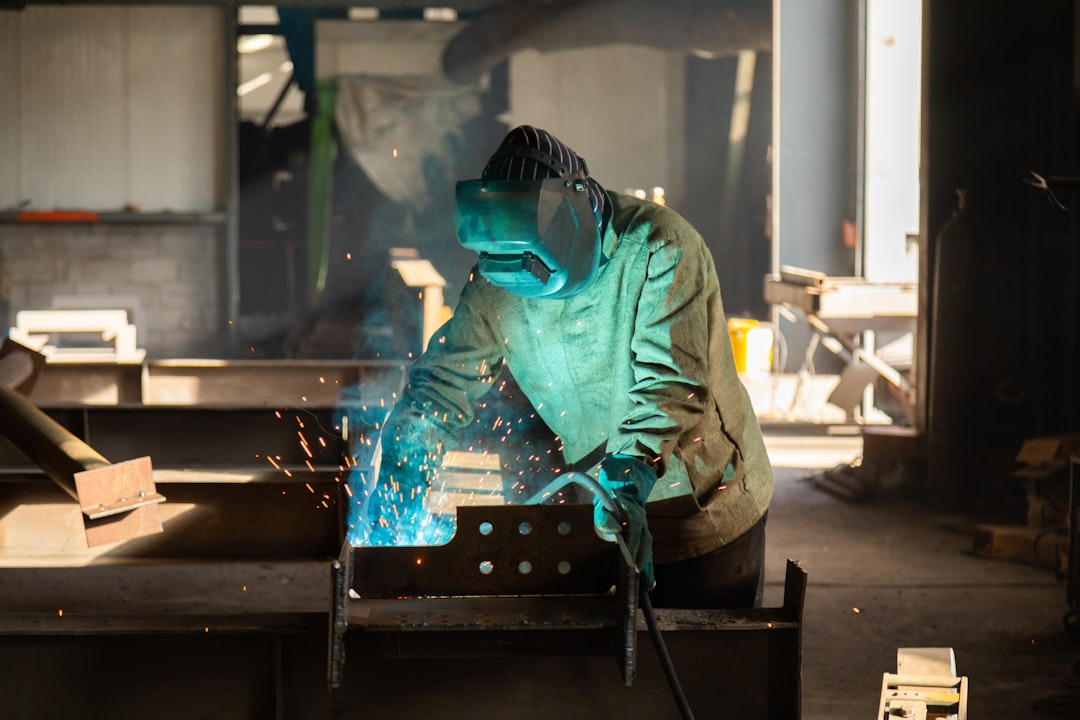
Photo by Collab Media on Unsplash
Steel vs. Aluminum vs. Plastic: Choosing Your Material
Your material choice depends on what you’re protecting and how aggressive your trails are. Each option has real tradeoffs in weight, cost, durability, and fabrication difficulty.
Steel is the workhorse choice for engine and transmission protection. It’s cheap (flat stock starts around $1–$3 per pound), bulletproof in a rock encounter, and you can weld it with basic equipment. A 1/8-inch steel plate (roughly 0.125 inches thick) is the standard for engine protection. You’ll spend $30–$60 on material, and it’ll handle serious rock strikes without bending. The downside: weight and rust. A steel skid plate for a midsize vehicle adds 15–25 pounds, and you’ll need to paint or coat it to prevent surface rust. For budget overlanders, steel is usually the right call for the engine and transmission.
Aluminum sits in the middle. It weighs about one-third as much as steel (lighter rig = better fuel economy and easier climbing), costs a bit more per pound ($2–$5), and doesn’t rust. The catch: aluminum bends more easily than steel in a hard hit. A 3/16-inch aluminum plate (0.1875 inches) roughly equals 1/8-inch steel in protection, which is why some overlanders prefer it. If weight matters (think high-mileage expedition rigs or vehicles you’re pushing to remote areas), aluminum justifies the cost. For casual trail use and budget-building, skip it unless you’re already familiar with aluminum welding.
Plastic (UHMW) is the surprise winner for fuel tanks, differential covers, and rear protection. Ultra-high-molecular-weight polyethylene is tough, bounces back from small impacts, and costs less than steel. It won’t rust, and you can drill and bolt it instead of welding. A 1/4-inch UHMW sheet runs $35–$50 and covers most rear-axle and fuel-tank protection scenarios. It won’t stop a direct engine-block hit like steel will, but for most offroad driving, UHMW protects where it counts. Many experienced overlanders run steel up front (engine and transmission) and UHMW in the back (fuel tank, transfer case, rear axle).
Your decision matrix is simple: engine and transmission = steel (most overlanders); fuel tank and rear axle = UHMW plastic (unless you do extreme rock crawling); aluminum = only if weight is a primary concern. For a first skid plate build, start with steel for the engine pan. You’ll need a basic MIG welder or access to one. If you don’t have welding capability, UHMW plastic is your path forward - you drill holes and bolt it down.
Measuring and Creating Templates for Your Vehicle
A template is the difference between a skid plate that fits and one you weld twice because the first version didn’t clear your steering or oil filter. Measure twice, cut once is especially true here.
Gather your measurements. Get your vehicle on level ground and measure three critical distances: the lowest point of your engine pan, the edges of your pan where you’ll mount the plate, and clearance for anything that sticks down (coolers, headers, suspension components). Measure from frame rails outward - most skid plates bolt to the frame, not the pan itself. Write everything down in inches. For a typical midsized SUV or truck, an engine skid plate is roughly 24 inches wide by 36 inches long, but your vehicle might be different. The point is: don’t guess.
Create a cardboard template. Cut a piece of cardboard to the approximate dimensions, lay it under your rig, and trace the pan outline. Mark where frame rails are, where you’ll need bolt holes, and where anything protrudes (thermostat housings, sump plugs, sensors). Leave 2–3 inches of overlap on each side so bolts can reach frame rails. Take photos and measure bolt-hole spacing. If your frame rails are 30 inches apart, your plate should be 32–36 inches wide at the bolt points.
Use the template to cut your material. If you’re building a steel skid, take your cardboard template to a metal-supply shop and ask them to plasma cut or shear it for you (usually $30–$50). If you’re drilling UHMW plastic, use the template to mark hole centers before you drill. Accuracy here saves frustration during installation. Mark fastener holes about 4–6 inches apart along the frame rails - too few and the plate flexes; too many and you’re over-engineering.
Account for clearance. Your engine pan often sits 4–6 inches below the lowest frame point. A skid plate should be 1–2 inches below the frame rail (so it’s the contact point in a rock strike, not your frame). Measure your steering components - power steering boxes and drag links protrude on many vehicles. Your template needs a notch or an opening so the plate doesn’t interfere. Test-fit before you commit to the final cut. Measure once more. Many overlanders remeasure three times because a cutting mistake means ordering and fabricating all over again.
Step-by-Step Installation Guide
Installation is straightforward if you’ve done your prep work. Follow these steps to bolt on your DIY skid plate correctly:
-
Gather your hardware and tools. You’ll need the ZELCAN M35 Cobalt Step Drill Bit Set (around $25–$35 for a complete set), a socket set, a torque wrench, and fasteners. For steel to steel, you’ll need mounting bolts - grab a set of Grade 8 Hex Bolt & Washer Assortment Kit (roughly $20–$30 for a variety pack). Grade 8 bolts are defined by SAE J429 standards and are hardened steel, rated for vibration environments, and won’t shear if your skid plate takes a serious hit. Use 3/8-inch or 1/2-inch diameter bolts depending on your frame-rail thickness and the size of your bolt holes. Don’t cheap out here - loose fasteners vibrate, and vibration is how you lose a skid plate on the trail.
-
Drill and deburr fastener holes. If you’re using UHMW plastic, drill straight through with a step bit at 1,500 rpm or slower to avoid melting the plastic. If it’s steel, use a center punch to mark each hole, then drill progressively - start with a smaller bit and step up. The step-drill set lets you size the hole correctly in one shot. Deburr every hole (use a file or deburring tool) so fasteners sit flush. Burrs trap dirt and accelerate corrosion.
-
Position the plate under your vehicle and align bolt holes. Place the skid plate under the engine, align your frame-rail holes, and clamp it in place. This is easier with a helper - one person holds the plate while the other marks or checks alignment. Mark pilot holes on the frame rail through your skid plate holes. If you’re bolting to frame rails, you may need to drill frame holes. For most vehicles, 3/8-inch holes in the frame are standard. Wear safety glasses and work carefully.
-
Install fasteners and torque to spec. Insert bolts through the skid plate into frame holes. Use washers and lock washers under the bolt heads to distribute load and prevent loosening. Torque bolts in a cross pattern (front-left, rear-right, front-right, rear-left) so the plate seats evenly. Consult your vehicle’s manufacturer service manual for OEM torque specifications, or use industry-standard values: for 3/8-inch Grade 8 bolts in a frame mount, torque to 45–55 foot-pounds. For 1/2-inch bolts, 75–90 foot-pounds. Use a torque wrench - guessing by feel leads to loose hardware and failed plates.
-
Check clearance and secure any drain plugs. Roll the vehicle forward and back, and turn the steering lock-to-lock to make sure nothing binds or rubs. Check that your oil drain plug and transmission drain plug clear the skid plate. If your skid plate covers the drain plug, you’ll need to remove the plate for servicing - factor that into your design. On some rigs, an access cutout or bolt-on cover section works better than a solid plate. Test before you seal everything up.
-
Seal steel and torque-check after trail miles. If you’re running steel, weld any seams (if not already done), and paint or epoxy-coat the underside to prevent rust. Let any paint cure fully (24 hours minimum) before loading the vehicle. After your first 500 trail miles, re-torque all fasteners. Vibration loosens bolts, especially on vehicles that see real terrain. A quick check with a socket wrench prevents a skid plate from sliding or detaching mid-trip.
Common Installation Mistakes and How to Avoid Them
Skid plate failures are usually preventable. Here are the mistakes overlanders make most often and how to sidestep them.
Underestimating bolt stress and using weak fasteners. The worst mistake is buying cheap fasteners. A 3/8-inch Grade 5 bolt might save you $0.50, but Grade 5 yields at about 85,000 psi while Grade 8 yields at 130,000 psi. On rocks, a skid plate takes lateral forces, not just downward load. Weak bolts shear, and you lose the plate. Grade 8 bolts (marked with six radial lines) cost almost nothing more and are your insurance policy. Don’t skip this step.
Drilling holes too large or misaligning them. A hole that’s too large lets the bolt spin inside the frame without tightening. Holes that don’t line up require forcing the skid plate into position, which warps it and stresses bolts. Drill pilot holes first, and use a center punch to prevent the bit from walking. If you’re bolting to existing frame holes, confirm they align with a flashlight before you start. A misaligned hole costs an hour of re-drilling and re-fitting.
Installing without washers or lock washers. Lock washers prevent fasteners from vibrating loose. Washers distribute bolt load so the fastener head doesn’t pull through soft aluminum or frame padding. This takes 30 seconds per bolt and prevents loose hardware on the trail. Many overlanders skip this and regret it 50 miles from camp when they hear a rattle.
Not torquing fasteners to spec and not re-checking after miles. Hand-tight is not tight. Torque wrench tight is. Fasteners loosen under vibration - that’s physics, not opinion. Re-torque after the first 100 miles of rough terrain. It takes 10 minutes and prevents a skid plate from shifting or falling. Make this a trail-camp checklist item.
Covering critical access points without an easy way to service the vehicle. An oil change shouldn’t require removing a skid plate. If your skid plate covers the drain plug, add a bolted access cover or design the plate with a cutout. Some overlanders weld the skid to the frame permanently and regret it during transmission fluid servicing. Design for access first, full coverage second.
Not accounting for flex and movement. Frame rails flex over bumps and rocks. A skid plate bolted at only two points will twist and fail. Use at least four solid mounting points, spaced evenly. If your vehicle has a suspension that articulates a lot (lifted trucks, especially), factor in movement by using slightly larger holes that allow the plate to move a bit without binding. Test on an easy trail first.
Protecting Undercarriage Beyond the Skid Plate
A skid plate protects your engine and transmission, but there’s more underneath that rocks can damage. Many overlanders build a comprehensive undercarriage armor strategy.
Fuel tank protection. Most stock plastic or aluminum fuel tanks sit low and vulnerable. A UHMW plastic plate under the fuel tank is essential for any serious trail use. Some overlanders build a cage-style protector using angle iron and bolts - it’s cheaper than you’d think (around $50–$80 in materials) and more effective because it distributes impact over a larger area. If your fuel tank is forward of the rear axle and accessible, bolt UHMW under it. If it’s aft, a simple impact guard works.
Differential and transfer case covers. Diff covers take direct hits on rocky approaches. Factory covers are light aluminum or plastic - not ideal for overlanding. A steel or UHMW skid under the diff adds real protection. Transfer cases (on 4WD vehicles) are similar. A simple bolted plate under both costs $40–$60 and prevents expensive damage. This is where some overlanders see the biggest ROI from DIY protection.
Rock rails and side protection. Frame rails and suspension links are vulnerable to side hits on tight trails. Rock rails (bolted to the frame sides) aren’t technically skid plates, but they’re part of the same protection philosophy. Many budget-builders weld angle iron to rock sliders or use bolted aluminum tubing. This gets complex fast, but the principle is the same: absorb impact before it reaches structural components.
Winch plate integration. If you’re adding a winch and a front skid plate, design them to work together. The winch plate can incorporate the skid-plate mounts, or you can bolt the skid underneath a separate winch plate. Think about this during template creation - a unified design is cheaper and lighter than two separate parts bolted on top of each other.
Frequently Asked Questions
Can I use stock frame holes for skid plate mounting, or do I need to drill new ones?
It depends on your vehicle. Many modern trucks have threaded frame inserts designed for factory undercarriage protection. Check your vehicle’s service manual or ask on a model-specific forum. If your frame has factory inserts (usually 1/2-inch or 3/8-inch threaded holes spaced 6–8 inches apart), use them - it’s the easiest path. If not, you’ll drill new mounting holes. Drilling frame is not complicated (center punch, safety glasses, step bit, plenty of cutting fluid), but it’s permanent. Mark and re-check your positions before drilling. Frame holes should be staggered so you’re not drilling across a seam or existing reinforcement. Most rigs have flat frame flanges on both sides that are perfect for mounting. If you’re unsure, post photos of your frame on a vehicle-specific forum and ask. The overlanding community is generous with frame-layout advice.
What thickness of steel is actually enough for engine protection, and will thinner material save money without sacrificing protection?
1/8-inch steel (0.125 inches) is the industry standard for engine pans, and there’s a reason. It’s thick enough to resist denting under most rock strikes and thick enough to handle the stress of bolted mounting without flexing. 3/16-inch (0.1875 inches) is overkill for most overlanders but adds extra safety if you plan serious rock crawling. 1/16-inch (0.0625 inches) is too thin - it dents easily and offers minimal protection. The cost difference between 1/8-inch and 3/16-inch steel is usually $10–$20 for a small plate, so if budget allows, go thicker. If you’re cutting costs, 1/8-inch is the minimum. Don’t go thinner. You can sometimes find used 1/4-inch plate steel (armor thickness) from industrial suppliers for a similar price as new 1/8-inch, and that’s a steal if you can get it.
Do I need to weld or can I use all bolts, and which is more reliable for remote overlanding?
A bolted skid plate is simpler to repair on the trail if it gets damaged. A welded skid plate is lighter (no extra bolt weight) and stronger overall, but you can’t patch a broken weld with a wrench and spare parts. Most experienced overlanders weld the skid to distribute stress and then bolt critical mounting points to the frame. If you’re not confident in your welding, go all-bolts and accept a slightly heavier plate. Bolts are reliable if you use Grade 8 fasteners and re-torque after every few hundred miles. Some overlanders carry spare bolts and a socket set specifically for in-field tightening. This is actually a smart approach - if a bolt breaks, you can replace it. If a weld cracks, you’re in trouble far from a welder. For remote trips, bolted is arguably more reliable.
How much weight does a DIY skid plate add, and does it really impact performance or fuel economy?
A steel skid plate for a midsize SUV weighs 15–25 pounds depending on size and thickness. A truck-sized plate might be 30–40 pounds. In context: that’s like adding one extra passenger, so the impact on fuel economy is minimal (maybe 1–2 mpg loss if at all). Weight is mostly noticeable in vehicles already pushing weight limits or climbing steep grades. If you’re overlanding in high altitude or on very technical trails where every pound matters, aluminum or UHMW plastic saves weight without losing protection. For most overlanders, the peace of mind from a skid plate offsets any minor fuel penalty. Some overlanders report a slight improvement in handling because the skid plate lowers the center of gravity slightly, though this is anecdotal.
Can I install a skid plate on a rig with an existing undercarriage already covered, like a factory plastic engine cover?
Yes, but it requires careful planning. Remove the factory plastic cover first - it’s usually clipped on and comes off in 10 minutes. Measure your frame rails and engine pan relative to where the plastic was, and design your skid plate to clear any sensors, wiring, or hoses that were behind it. The advantage is that you already know the frame layout because the factory had to engineer around it. Make your template more conservative (slightly larger to account for these obstacles) and you’ll be fine. Some overlanders keep the plastic cover as a thermal barrier and bolt a metal skid over the top, but this adds weight and complexity. Better to replace it with one unified, purpose-built plate.
Conclusion
A DIY skid plate is one of the highest-value upgrades you can build on a budget. For $75–$150 in materials and a weekend of work, you get undercarriage protection that matches or exceeds a $400+ commercial kit. The key is choosing the right material for your driving style (steel for the engine, UHMW for the rear), measuring accurately before you cut, and using proper fasteners that won’t shake loose. Most failures aren’t due to faulty design - they’re due to weak bolts, misalignment, or skipped re-torquing after the first few miles. Build methodically, test before heading to serious terrain, and re-check your bolts regularly. Your engine and transmission will last longer, your fuel tank will be safer, and you’ll know exactly what your undercarriage protection does because you built it yourself.
Start with a simple engine skid in steel or a fuel-tank skid in UHMW plastic. Once you’ve got one bolted down and tested, you’ll understand the process well enough to expand to other components. The overlanding community has solved this problem a hundred times - forum threads, build logs, and trail reports all document what works. Use that collective knowledge and your own measurements, and you’ll end up with a rig that’s genuinely protected without the premium price tag.
Bookmark this guide and refer back after your first 100 trail miles to re-torque and inspect.