DIY Underbody Protection: Sealing, Corrosion Prevention, and Repairs
This post contains affiliate links. As an Amazon Associate, I earn from qualifying purchases at no extra cost to you.
Your truck’s underbody is exposed to mud, saltwater, rocks, and river crossings that strip away paint and expose bare metal to rust. Professional coatings run $400 to $1,500, but a DIY job costs just $80 to $150. A single can of Rust-Oleum 248657 Rubberized Undercoating Spray costs around $20 and covers roughly 15 square feet. Plan on 6 to 10 cans for full coverage.
This guide walks you through choosing the right product, prepping your rig’s underside, applying the coating correctly, fixing damage as it happens, and maintaining your protection season after season.
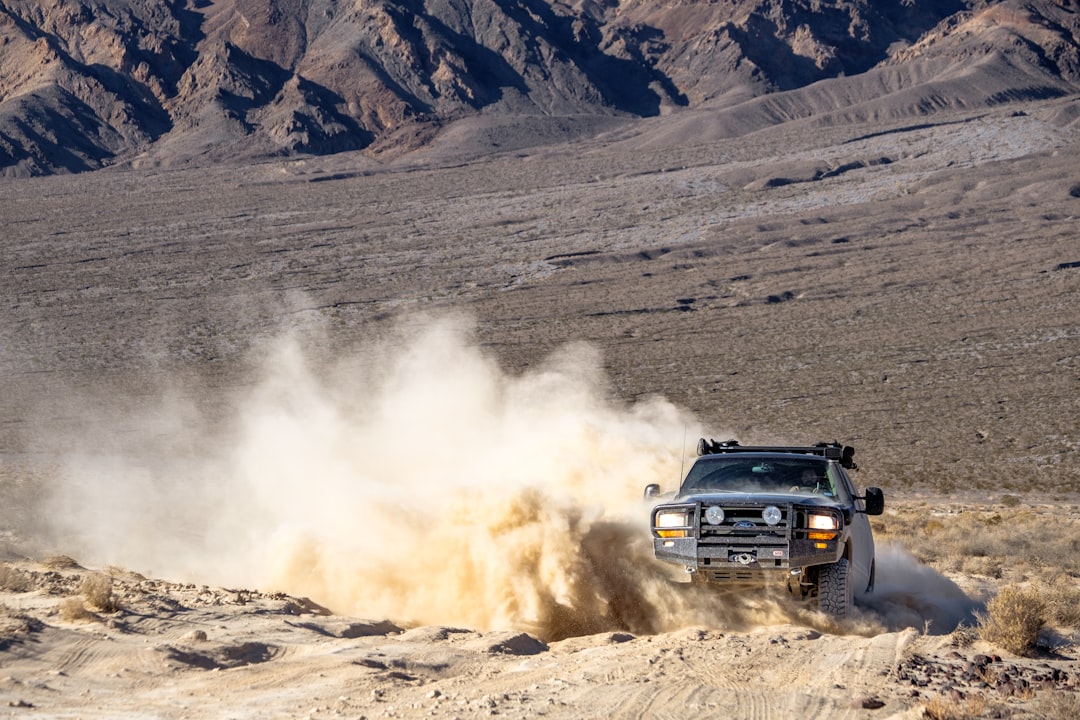
Photo by Chris Cordes on Unsplash
Why Underbody Protection Matters for Overlanders
Your vehicle’s underbody is the first line of defense but the most exposed. Factory paint abraded by mud and water crossings leaves bare metal vulnerable to corrosion. Moisture collects in panel crevices and suspension geometry creates puddles that dry slowly. In coastal regions or salt-treated roads, rust can penetrate an unprotected underbody in 4 to 6 months.
Bare steel oxidizes within 72 hours of paint removal, and corrosion spreads rapidly thereafter. According to the National Association of Corrosion Engineers (NACE), a pinhole of exposed metal can rust through quarter-inch thickness in 18 to 24 months in salt-spray environments. Frame rails, fuel tanks, and brake lines are particularly vulnerable because they hold water and mud against metal.
Replacing a rusted fuel tank ($500 to $800), brake line ($150 to $300), or frame member ($1,000 to $3,000) far exceeds prevention costs. Even a corroded shock mount becomes a $200 repair if surrounding metal weakens. Apply protection before rust starts; once pitting forms, coating only slows damage.
Underbody protection also extends resale value - a rust-free undercarriage signals serious maintenance, while a corroded frame cuts resale value by 20 to 40 percent.
Types of Undercoating: Rubberized, Oil-Based, and Tar-Based Coatings
Rubberized undercoating is the most popular budget option. It dries to a flexible, rubber-like finish that expands and contracts with vehicle movement without cracking. A gallon covers 80 to 120 square feet; a spray can covers 12 to 18 square feet with 2 to 3 coats. Most products reach full cure in 24 to 48 hours at temperatures between 50°F and 85°F and humidity below 80 percent.
The downside: it can trap moisture underneath if applied over existing rust. Never coat over loose, flaking, or wet surfaces - moisture continues spreading rust underneath, causing coating failure.
Oil-based rust inhibitors (like Fluid Film and Boeshield T-9) are thinner, penetrating coatings that seep into crevices, displace standing water, and create a barrier against moisture. They’re excellent for treating corroded areas and maintaining existing protection. They offer self-healing properties - when scratches expose bare metal, oil migrates toward exposed areas. They don’t form a protective shell like rubberized coatings, so they work best as secondary maintenance layers. A gallon covers 150 to 250 square feet at $25 to $35 per gallon. SAE standards for corrosion testing provide benchmarks for evaluating undercoating performance in salt-spray environments.
Tar-based coatings are older technology, increasingly rare and inferior to modern rubberized products.
The best approach is a two-layer system: rubberized undercoating as primary seal, then oil-based inhibitor for maintenance every 6 months. The Rust-Oleum 248656 Professional Grade Rubberized Undercoating covers 120-150 sq ft per gallon. For maintenance, the Fluid Film 1 Gallon Rust Inhibitor costs $25 to $30.
A complete underbody job costs $80 to $150 in materials (8 to 12 spray cans). Adding oil-based maintenance costs $30 to $50 per application, done twice yearly for $60 to $100 annual maintenance.
Prepping Your Underbody: Cleaning and Rust Removal
Preparation is critical. Skip this and your coating will peel within weeks. A thorough prep takes 4 to 8 hours depending on corrosion severity.
Start with a complete wash. Use a pressure washer at 2,500 to 3,000 PSI to blast off all mud, dirt, and debris. Many DIY car wash bays cost $12 to $20 for 15 to 20 minutes. Pay special attention to crevices, suspension arms, frame rails, and mud-collection areas.
For heavily corroded areas, soak metal with rust converter for 15 to 20 minutes before washing. Ospho Rust Converter ($12 to $18 per bottle) covers 20 to 30 square feet and chemically stabilizes rust. Allow 24 hours cure before coating.
Remove loose paint and rust carefully. Use a wire brush on a drill at low to medium speed (under 1,500 RPM), a palm sander with 60-80 grit sandpaper, or a bench wire wheel. For active rust (orange/brown oxidation), apply rust converter, wait 24 hours, then apply fresh coating. This is faster than sanding and removes 90 percent of corrosion chemically.
Dry the underbody completely before coating. Give it 24 to 48 hours in good weather. In humid climates (above 60 percent humidity), extend drying to 48 to 72 hours. Use compressed air to blow moisture from crevices and seams.
Protect areas you don’t want coated. Mask the exhaust system with heat-resistant tape and brake lines with masking tape. Coating on exhaust insulates heat and creates fire risk. Coating on brake lines interferes with flexibility.
Bring basic tools: wire brush drill attachment ($8 to $12), sandpaper ($5), masking tape ($3), plastic sheeting ($5), and safety gear (respirator $25 to $40, gloves $3 to $5, glasses $5). Total prep materials: $50 to $70.
Step-by-Step DIY Underbody Protection Application
-
Set up your workspace and ventilation. Work outdoors or in well-ventilated spaces. Wear a respirator rated for organic vapor, safety glasses, gloves, and protective clothes. Lay cardboard to catch overspray. Have a fire extinguisher nearby. Work on a dry day with temperatures between 50°F and 85°F and humidity below 80 percent.
-
Shake or stir the coating thoroughly. Shake spray cans hard for 2 to 3 minutes. Stir gallon containers with a paint mixer for 3 to 5 minutes until no settled material remains. Rubberized coatings contain heavy solids that settle quickly. Re-stir gallon containers every 15 to 20 minutes during application. For spray cans, shake every 30 to 45 seconds.
-
Apply the first light coat to the entire undercarriage. Start at one end and work systematically toward the front. Hold the spray can 8 to 12 inches from the surface using smooth, even strokes. Light coats adhere better than one thick coat. The first coat should look slightly glossy but show surface detail. This typically takes 3 to 5 cans. Avoid runs or drips.
-
Apply a second coat after the first tacks up. Most products are ready after 2 to 4 hours when the surface feels slightly tacky. Don’t wait longer than 24 hours between coats. Use the same systematic approach with slightly heavier application. Two coats create a protective shell roughly 1 to 2 millimeters thick. The second coat requires another 3 to 5 cans.
-
Address thin spots and high-risk areas. After the second coat is drying, inspect for thin spots, bare metal, or missed crevices. Suspension pivot points, shock mounts, frame welds, and former rust areas need extra attention. Fill thin spots with a third coat or use a brush for tight spaces.
-
Allow full cure before trail use or pressure washing. Most products reach surface dry in 2 to 4 hours, but full cure takes 24 to 48 hours. Don’t wash or pressure-wash until fully cured. If you must drive after 4 to 6 hours, be gentle - avoid deep water and mud.
This job takes 4 to 6 hours spread over two or three days. A full truck needs roughly 8 to 12 spray cans ($160 to $240). Total material cost: $150 to $200.
Spot Repairs and Touch-Ups on Existing Protection
Inspect twice yearly for damage. Look for thin spots, orange/brown discoloration (active rust), or coating separation.
For small nicks under 6 inches: Clean away loose coating with a brass brush. Wipe dry, then apply a spot coat. Takes 10 minutes.
For larger damaged areas (6 to 24 inches) or active rust: Wire-brush to bare metal. If rust is extensive, use rust converter. Apply fresh rubberized coating in 2 to 3 coats. Takes 30 to 45 minutes plus drying and costs $15 to $25.
For seams, crevices, and maintenance: Oil-based inhibitors reach tight spaces perfectly. After major trips or at season start, brush or spray Fluid Film into suspension joints and frame crevices. Takes 15 to 20 minutes and costs $3 to $5.
For large separation or peeling (greater than 24 inches): Wire-brush all loose coating away, check for rust underneath, apply rust converter if needed, then recoat with 2 to 3 layers. Small repairs prevent rust from spreading and becoming expensive.
Corrosion Prevention Maintenance Schedule
Every 3 months or before/after major trips:
- Pressure wash the underbody at a DIY car wash (2,500-3,000 PSI).
- Inspect for damage or rust spots with a flashlight.
- Repair small damage under 6 inches immediately.
Every 6 months (spring and fall):
- Thoroughly wash and dry the underbody.
- Apply oil-based inhibitor to suspension pivot points and frame seams (20-30 minutes, $5-$10).
- Check for widespread coating failure.
Every 12 to 18 months:
- Plan spot recoats if 20 to 30 percent of original protection is compromised.
- For heavy-use overlanders, schedule full recoat at 18 months.
Every 2 to 3 years:
- Heavy-use vehicles (frequent water crossings, coastal environments, winter driving) need full recoat every 18 to 24 months. Don’t strip old coating - new coating bonds fine if existing coating is intact.
- Moderate-use vehicles can stretch to 3 to 4 years with regular maintenance.
- Light-use vehicles in dry climates might go 4 to 5 years.
Climate-specific guidance:
- Coastal/salt-spray: Plan maintenance every 3 months and recoat every 12 to 18 months.
- Winter/road-salt regions: Plan maintenance every 6 months and recoat every 18 to 24 months.
- Wet/humid regions: Plan maintenance every 6 months and recoat every 2 to 3 years.
- Dry/arid regions: Maintenance annually, recoat every 3 to 5 years.
Consistency prevents expensive repairs. Fifteen minutes of washing every three months and $15 of maintenance coating twice yearly prevents rust and keeps your rig trail-ready.
Troubleshooting: Common Mistakes and How to Avoid Them
Mistake 1: Applying coating over dirty or wet surfaces. Coating applied over dirt or moisture will bubble within days and peel within weeks. Spend time washing and drying. Use a pressure washer, let the surface dry fully, then use compressed air to blow moisture from crevices. Wait the full 24-48 hours for drying.
Mistake 2: Applying one thick coat instead of multiple thin coats. Thick coating runs off vertical surfaces, drips, and doesn’t dry evenly. Multiple thin coats adhere better and dry faster. Plan for 2 to 3 coats with 2 to 4 hours between coats.
Mistake 3: Forgetting to mask off critical areas. Coating on exhaust systems insulates heat and creates fire risk. Coating on brake lines interferes with flexibility. Coating on electrical connections causes corrosion. Spend 15 minutes masking before spraying.
Mistake 4: Choosing the wrong product for your climate. Rubberized coating needs 50-85°F and humidity below 80 percent for proper cure. Check the weather forecast before starting. Use rubberized coating as primary layer and oil-based for maintenance.
Mistake 5: Neglecting spot repairs. A small nick taking 10 minutes to repair becomes a rust crater requiring full recoating in 12 months if ignored. Check underbody twice yearly and fix damage within a week.
Mistake 6: Not shaking or stirring the product. Rubberized coatings settle quickly. If you don’t shake spray cans or stir gallon containers, first applications contain mostly solvent and little protective material. Shake spray cans hard every 30 to 45 seconds. Stir every 15 minutes.
FAQ
Q: Can I apply underbody protection over old, existing rust?
A: Light surface rust can be treated with rust converter, then coating applied over it. Heavy rust, deep pitting, or thick corrosion must be cleaned to bare metal using a wire wheel or sanding. If you coat over heavy rust without removing it, moisture will continue spreading rust underneath, and coating will fail within months. If surface rust is stable and adheres tightly, rust converter works well - it chemically converts iron oxide to a stable compound. When in doubt, wire-brush it away. The extra 30 minutes prevents coating failure and expensive repairs later.
Q: How often should I recoat my entire underbody?
A: Heavy-use rigs (frequent water crossings, weekly driving, coastal salt spray, winter driving with road salt) need full recoating every 12 to 18 months. Moderate-use overlanders (monthly to quarterly trail driving) can extend this to every 2 to 3 years with regular maintenance coating. Light-use vehicles in dry climates might go 3 to 4 years between full recoats. You don’t need to strip old coating - new coating bonds fine over old coating if it’s in decent shape. If you see widespread peeling (more than 25 percent), do spot recoating of affected areas. Regular maintenance (oil-based inhibitor every 6 months) extends time between full recoats significantly.
Q: Is oil-based inhibitor like Fluid Film better than rubberized undercoating?
A: They serve different purposes and work best together. Rubberized coating forms a protective shell that seals out moisture and prevents rust. Oil-based inhibitor penetrates crevices, displaces water, and treats existing corrosion - but doesn’t form a thick seal. Oil alone will allow new rust to form over time because it doesn’t block water access. Start with rubberized coating as your primary layer (2 to 3 coats), then use oil-based inhibitor for maintenance every 6 months. This combination is more durable and cost-effective than either product alone. Oil drips for several days after application, so apply it when you can park indoors for 3 to 5 days.
Related Reading
- DIY Skid Plate Materials, Templates, and Fitment - Pair underbody protection with proper skid coverage
- Budget Axle and Differential Protection - Protect your drivetrain components from impact and corrosion