How to Seal and Repair Undercarriage Rust on an Overland Vehicle
This post contains affiliate links. As an Amazon Associate, I earn from qualifying purchases at no extra cost to you.
Budget overlanding rigs have one thing in common: they are old. A $3,000 Tacoma, a $5,000 4Runner, a $4,500 Cherokee - these are vehicles with years of road salt, mud, and moisture hiding under the rockers and frame rails. Most buyers check the drivetrain and knock on the body panels. Few actually crawl underneath before signing the title.
That is where rust wins.
Undercarriage corrosion on an overland vehicle is not just cosmetic. Rusted frame rails flex differently than solid steel. Corroded suspension mounting points can crack under trail stress. A brake line eaten through by surface rust can fail when you need it most. The good news is that surface rust and moderate scale rust can be arrested, converted, and sealed for well under $100 in materials if you do the work yourself.
This guide covers how to diagnose what you are dealing with, prepare the metal correctly, apply rust converter and topcoat in the right sequence, and keep the undercarriage protected through future seasons of trail use. The approach here is permanent treatment built around proven chemistry - not rattle-can concealment.
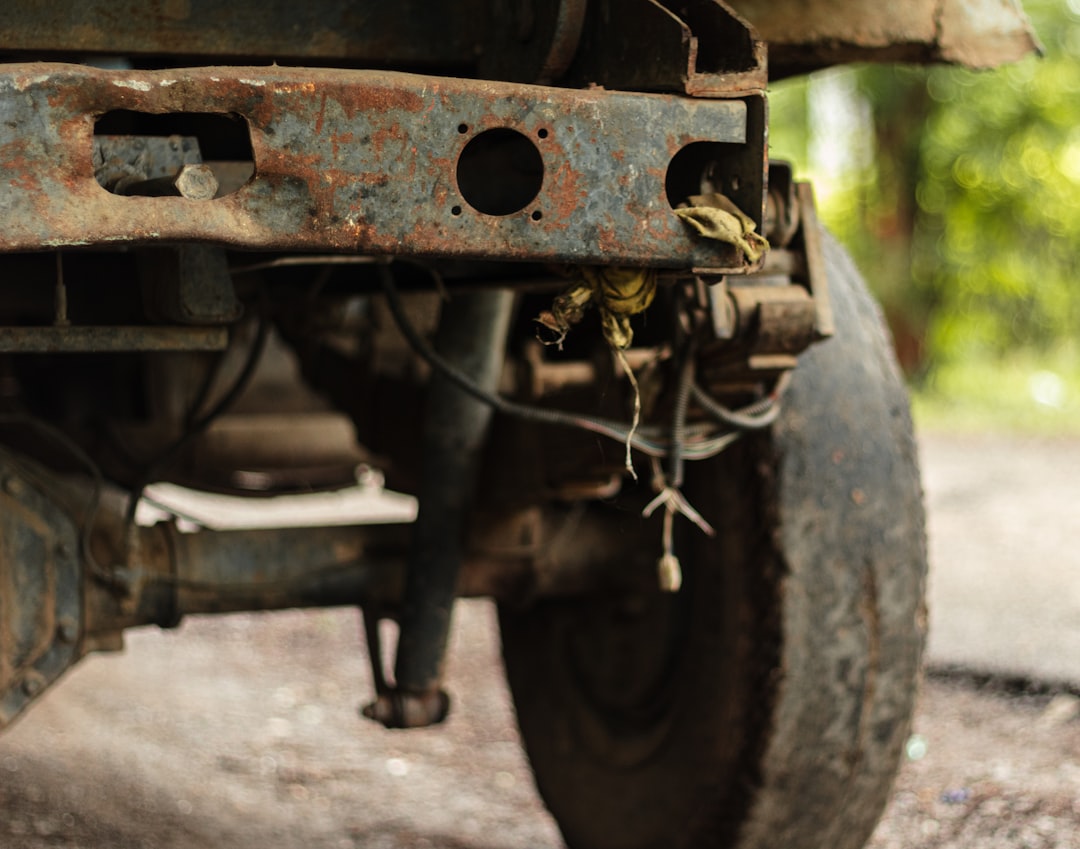
Photo by Zoshua Colah on Unsplash
Why Undercarriage Rust Hits Off-Road Vehicles Harder
Most daily drivers live on pavement, where salt and moisture attack exposed metal at a predictable and relatively slow rate. Overland vehicles take a different beating entirely. Water crossings push moisture directly into frame seams, suspension pockets, and floor pan channels. Mud packs into cavities and holds that moisture against bare metal for days after a trail run. Rock strikes chip factory undercoating and expose fresh steel. Then the salted highway on the drive home finishes the job.
The result is that a 15-year-old overlander can carry undercarriage rust five to ten years more advanced than a comparably aged commuter car. Frame rail surface rust is common on anything over 150,000 miles with several seasons of winter driving. Body-on-frame trucks develop rust at the frame-to-body mount locations, where rubber isolators trap water and hold it against the steel. Unibody vehicles - older Jeep Cherokees, most crossover-based platforms pressed into overlanding duty - rust at rear suspension subframe mounts and rocker seams, where structural integrity matters most.
The critical distinction is between three categories of corrosion. Surface rust is oxidation that has not eaten through the metal: you see discoloration and minor pitting, but the underlying steel is intact. Scale rust is heavier flaking with visible layers peeling away, but the metal beneath is still largely solid. Penetrating rust means the steel has lost structural thickness and flexes or crumbles under pressure. Surface and scale rust are DIY-addressable with the products and process in this guide. Penetrating rust on structural components - frame rails, crossmembers, control arm mounting points - requires professional evaluation and should be treated as a buy-or-walk decision when shopping for a build vehicle.
Diagnosing Your Undercarriage Before You Buy a Single Product
Get under the vehicle with a bright work light and a stiff-bladed screwdriver before you order anything. Probe every suspect area with moderate firm pressure. If the screwdriver tip penetrates the metal, it has lost structural integrity and surface treatment alone cannot fix it. If it bounces back against hard metal beneath the rust, you are dealing with surface or scale rust that this guide addresses.
Work through these zones systematically:
- Frame rails front to rear, especially behind the front wheel wells and just forward of the rear axle - both are road spray concentration points
- All visible crossmembers and body mount pads
- Rocker panels at their seam welds
- Fuel and brake line routing brackets and clips
- Rear leaf spring perches and U-bolt plates on trucks
- Floor pan - check from inside the cabin with carpet pulled back, looking for bubbling paint or soft spots under thumb pressure
Photograph and chalk-mark problem areas before treatment starts. The photos give you a reference point during the job and a baseline if you discover additional structural damage later.
If the screwdriver penetrates frame rails or crossmembers anywhere, consult a qualified shop before committing further money to the build. AMPP - the Association for Materials Protection and Performance is the professional body for corrosion engineering and maintains public resources that help calibrate what qualifies as structurally significant damage. Some frame rust is repairable by a competent welder for a few hundred dollars. Other damage makes a vehicle unsafe to build on regardless of how much money goes into recovery gear and skid plates. Knowing the difference before you start spending matters.
Tools and Materials You Need for Undercarriage Rust Repair
Good preparation outweighs product selection every time. Even the best rust converter fails on a dirty or oily surface. Gather everything before you start - making mid-job supply runs while chemicals are half-applied leads to shortcuts.
Safety Warning: Rust converters in this guide use phosphoric acid as the active ingredient. OSHA’s hazard communication standards classify phosphoric acid as a corrosive requiring full skin and eye protection. POR-15 contains solvents requiring respiratory protection during application. Work outdoors or in a well-ventilated shop. Wear chemical-resistant gloves, safety glasses, and an organic vapor respirator for any spray or brush application. Keep rags away from open flame. Dispose of solvent-soaked materials per your local hazardous waste guidelines. Do not eat, drink, or touch your face during the job.
Mechanical prep tools:
- Wire brush drill attachments - a knotted cup brush for heavy scale, a crimped wheel for tighter areas
- An angle grinder with a wire wheel for large frame sections (optional but significantly faster)
- 80-grit sandpaper for feathering paint edges
- Rags and acetone or a quality solvent degreaser
- Four-point jack stand support, a creeper, and a shop light or headlamp
The three core rust treatment products:
- Ospho Metal Treatment Gallon: a phosphoric acid-based rust converter that chemically reacts with iron oxide and converts it to iron phosphate, a stable compound that halts active corrosion
- POR-15 Rust Preventive Coating: a moisture-cured polymer topcoat that bonds to converted metal and forms a hard, non-porous barrier against water and oxygen
- Fluid Film Aerosol: a lanolin-based penetrating protectant for cavity sections, enclosed frame channels, and annual re-treatment where hard coatings cannot reach
Application supplies:
- Cheap 1 to 2-inch bristle brushes (plan to discard after POR-15 use)
- Painter’s tape and plastic sheeting to mask brake lines, ABS sensors, rubber bushings, and exhaust components
- Chemical-resistant gloves for Ospho, nitrile for POR-15
A hydraulic lift makes this job significantly easier and safer. If you do not have lift access, quality rated jack stands and good lighting are non-negotiable. Plan to work in sections across multiple days rather than attempting the entire undercarriage in a single session.
How to Seal and Repair Undercarriage Rust Step by Step
Work one section at a time - front frame rails one day, rear frame and floor pan another. Proper cure time between steps means the job spans a minimum of two full days. Rushing either the prep or the cure is the most common reason treatments fail within the first season.
-
Pressure wash the entire undercarriage and let it dry completely. Allow at least 24 hours in moderate humidity, longer in damp climates. No product in this guide adheres correctly to wet or dirty metal.
-
Mask sensitive components before mechanical work begins. Cover brake lines, ABS wheel speed sensor wiring, rubber bushings, and exhaust components with painter’s tape and plastic sheeting. Phosphoric acid is corrosive to rubber and accelerates degradation of brake line outer coatings on direct contact.
-
Mechanically abrade all loose and flaking rust. Use a wire cup brush or angle grinder wheel to remove loose scale. The goal is not bare shiny metal everywhere - rust converters require oxidized iron to react with. Remove anything loose or flaking; leave firmly adhered rust for the converter.
-
Degrease all surfaces thoroughly. Wipe every area with acetone or a quality degreaser. Oil contamination is the primary cause of coating adhesion failure. Allow the surface to dry completely before the next step.
-
Apply Ospho rust converter by brush to all rusted surfaces. Ospho reacts with iron oxide and converts it to iron phosphate, a stable compound that halts active corrosion. Apply a generous coat and allow to cure fully before the next step—allow additional time in cool or humid conditions. Partial curing before topcoat is the most common application error.
-
Wipe off Ospho residue after curing. Use a damp cloth to remove any chalky phosphate residue, then allow to dry fully before the next step.
-
Apply POR-15 Rust Preventive Coating in two thin coats. POR-15 cures by absorbing atmospheric moisture. Apply the first coat and let it become tacky before applying the second. Two thin coats are recommended over one thick coat for best adhesion and flexibility. Allow full cure before use; cure time varies by temperature and ambient humidity.
-
Treat cavities and seams with Fluid Film Aerosol after POR-15 has fully cured. Run the aerosol wand into every frame seam opening, drain hole, enclosed box section, and body mount cavity you can access. Fluid Film stays fluid and displaces moisture on contact—it requires annual reapplication to stay effective.
-
Photograph the completed treatment and document what needs future attention. Note any areas where penetration into closed sections was limited and flag them for the next maintenance cycle.
Comparing Ospho, POR-15, and Fluid Film for Undercarriage Protection
Each product fills a specific role in a complete treatment system. Using all three correctly gives layered protection that outperforms any single product. The table below explains what each one does - and does not do - so you can make informed decisions if budget or time forces you to stage the project.
| Product | Type | Primary Role | Key Limitation |
|---|---|---|---|
| Ospho | Phosphoric acid rust converter | Neutralizes active iron oxide chemically | Not a standalone topcoat; surfaces need sealing afterward |
| POR-15 | Moisture-cured polymer coating | Hard, non-porous barrier over converted rust | May require a topcoat on surfaces exposed to direct sunlight |
| Fluid Film | Lanolin-based penetrating protectant | Cavity treatment and ongoing annual maintenance | Not a structural sealer; requires periodic reapplication |
If forced to prioritize, apply Ospho and POR-15 to all visible structural surfaces first - that addresses the active rust and seals it. Add Fluid Film to the first annual maintenance cycle. Do not skip the converter step and go straight to topcoat on active rust; sealing over unconverted rust without neutralizing it first is how corrosion continues undetected beneath an intact-looking coat.
Annual Protection: Keeping Undercarriage Rust at Bay
A single treatment is not permanent protection on a vehicle that takes regular trail use. Rock strikes chip POR-15 and expose raw metal. Water crossings push moisture into seams. Winter salt reactivates any area where the coating has been compromised. Annual inspection and targeted reapplication keep the full system working.
The practical maintenance schedule for an active overland vehicle:
-
Spring, after winter salt season: Pressure wash and inspect thoroughly. Look for chips in the POR-15 coating, new rust bleeding from seams, and areas where Fluid Film has been displaced by trail abrasion. Touch up POR-15 chips immediately - catching them while small prevents them from becoming rust centers that undercut adjacent intact coating.
-
Fall, before winter: Re-apply Fluid Film Aerosol to all cavity sections, enclosed frame channels, and seam openings. Use the wand applicator to reach enclosed sections throughout the frame. This annual application prevents a significant amount of salt-season damage.
-
After significant water crossings: A quick pressure wash and visual inspection takes 20 minutes and catches problems while they are still small. Water crossings push moisture into seams and drain holes that annual treatment may not fully penetrate.
Budget overlanders who keep their rigs serviceable long-term treat undercarriage maintenance like oil changes - as a non-optional calendar item rather than a reactive response after visible damage appears. The consumable cost of Ospho touch-ups, a can of POR-15, and a couple of cans of Fluid Film per year is modest. The cost of a rusted-through frame rail is measured in thousands, or in a rig that can no longer be safely built on.
If you are still in the vehicle selection phase, the guide on how to pick an overlanding vehicle on a tight budget covers which rust conditions are dealbreakers versus which are addressable after purchase.
Common Mistakes to Avoid When Treating Undercarriage Rust
Skipping the degreasing step. This is the single most common reason a rust treatment fails within the first season. Ospho will not penetrate oily metal, and POR-15 will not adhere to a contaminated surface. A factory undercarriage carries years of road grime, oil seepage from engine and differential gaskets, and accumulated grease from suspension fittings. Wipe everything down with acetone before any product touches metal. The cost of a rag and a quart of acetone is negligible compared to reworking a failed coating.
Applying Ospho to freshly wire-wheeled bare metal. Phosphoric acid converters work by reacting with iron oxide. On bare bright steel, there is little oxidation to react with and the converter produces minimal benefit. If mechanical prep has taken an area to bare metal, skip the converter on that section and apply POR-15 directly after a final acetone wipe. Use Ospho on areas where rust is still present.
Rushing cure time between steps. POR-15 cures via atmospheric moisture absorption. Apply it in too-dry conditions or topcoat it before it has properly set, and adhesion suffers significantly. Follow the manufacturer’s temperature and humidity window. In dry desert climates during summer, early morning application when relative humidity is higher consistently produces better results than midday work.
Leaving brake lines and rubber components unmasked. Phosphoric acid can accelerate degradation of brake line outer coatings on direct contact. Mask every brake line, ABS sensor wire, fuel line, and rubber bushing before applying Ospho to adjacent frame sections. After the job is complete, inspect all rubber components in the treatment zone before driving. This is a safety matter, not an aesthetic one.
Treating visible surfaces and ignoring enclosed frame sections. Frame box sections on most trucks and SUVs accumulate internal moisture. Exterior POR-15 can look solid while the inside of the same frame rail corrodes unchecked. This is exactly the failure mode Fluid Film with a wand applicator addresses. Completing a hard-coat treatment without cavity protection solves roughly half the corrosion problem.
Using Fluid Film as a substitute for POR-15 on visually active rust. Fluid Film is a maintenance product and cavity protectant. It will slow progression on lightly rusted surfaces, but it will not halt moderate-to-heavy active rust the way a converter-plus-polymer-topcoat system does. Each product has a defined role in the sequence, and substituting based on what you have in the shop usually produces a partial result.
Ignoring suspension and brake components while you are already underneath. This is the optimal time to inspect caliper brackets, brake hoses, wheel bearing hub flanges, and control arm bushings. Completing a thorough frame rust treatment while missing a corroded caliper mounting bracket is a false sense of security. Use the time on the ground to inspect everything within reach.
Frequently Asked Questions
How long does this undercarriage rust treatment last on an off-road vehicle?
A properly applied Ospho-plus-POR-15 treatment holds up well on an actively used overland vehicle before significant recoating is needed, even with regular trail use including rock strikes, water crossings, and seasonal salt exposure. Annual Fluid Film reapplication in seams and cavities extends the useful life of the whole system considerably. Inspect each spring after winter and touch up chipped POR-15 immediately - early repair is far cheaper than a full reapplication.
Can I use POR-15 without Ospho as a first step?
Yes. POR-15 bonds directly to surface rust and to prepared bare metal - the manufacturer recommends light rust or metal etched with a phosphoric acid prep as ideal substrates. If you wire-wheel an area to stable but not fully bare metal, POR-15 will adhere well. The case for using Ospho first is that chemical conversion neutralizes active iron oxide rather than just sealing it, reducing the risk of corrosion creeping beneath the hard coat over time. On heavy-to-moderate rust, the combined process is more reliable. On light rust with good mechanical prep, POR-15 alone is a legitimate one-step approach that cuts a full day from the job.
Is Fluid Film safe to use near brake lines and rubber components?
Fluid Film is formulated to be considerably less aggressive on rubber than many petroleum-based undercoating products. That is part of why it is widely used in agricultural and marine applications where rubber hoses and seals are everywhere. That said, overspray of any lubricant on brake rotors, pads, or caliper friction surfaces degrades braking performance - a real safety concern regardless of which product causes it. Mask brake assemblies before applying Fluid Film in adjacent areas, and wipe any rotor overspray thoroughly before driving. The aerosol wand gives good directional control when you work carefully.
Should I treat the undercarriage before or after installing skid plates?
Always treat first. Installing skid plates over untreated rust traps moisture between the plate and frame and accelerates exactly the problem you are trying to prevent. Complete the full Ospho-POR-15-Fluid Film treatment, allow full cure, and then fit your skid plates. Apply a bead of body seam sealer or an additional layer of Fluid Film to the contact interface between skid plate mounting brackets and the frame steel before torquing fasteners - this prevents standing water from accumulating in that gap and restarting corrosion at the mount points. For detailed coverage of skid plate fitment, the guide on DIY skid plate materials, templates, and fitment covers bracket positioning and material selection in full.
The Most Defensible Investment in Your Build
Undercarriage rust treatment is not a glamorous upgrade. It does not add ground clearance, improve recovery capability, or make for compelling trail photos. What it does is protect every other investment you make in the vehicle. A rusted frame reduces the structural margin your bumpers, winch mount, and skid plates depend on. It makes suspension upgrades unpredictable and frame-mounted recovery points genuinely unsafe. Addressing rust before you layer on upgrades is the responsible build sequence.
The three-product system in this guide - Ospho to convert active rust, POR-15 to seal it under a hard polymer barrier, and Fluid Film to maintain cavity sections annually - is one of the most cost-effective protection upgrades you can make on a budget build. Do the inspection first. Know what category of rust you are dealing with. Treat everything the screwdriver test clears. Build on a solid foundation.
Bookmark this guide for your next maintenance weekend, or share it with someone who just picked up a new-to-them overland rig and has not looked underneath yet.
Related Reading
- How to Pick an Overlanding Vehicle on a Tight Budget - what undercarriage rust conditions are dealbreakers before you sign the title
- DIY Skid Plate Materials, Templates, and Fitment - how to protect the undercarriage you just treated from future rock strikes