Best rooftop tents under $1,000: the step up from entry-level models
This post contains affiliate links. As an Amazon Associate, I earn from qualifying purchases at no extra cost to you.
The entry-level rooftop tent market is packed with $400-$600 options that will technically get you off the ground. But after one wet weekend watching condensation drip through an undersized rainfly, or fighting a zipper that started separating on day three of a four-day trip, most overlanders start shopping the next tier up. That is exactly where rooftop tents under $1,000 live - and this price range is genuinely where the product category starts making sense for sustained, serious use.
The jump from a $500 RTT to an $800-$950 model is not incremental. You get meaningfully better waterproofing, denser foam mattresses that do not compress into pancakes by month three, more robust pole systems, and zippers rated for substantially more open-and-close cycles before they fail. You also start seeing actual 3-season and 4-season claims backed by tested fabric weights and real construction specs rather than lifestyle photography.
This guide covers what separates a mid-range RTT from a cheap one, which features matter and which are marketing noise, how to verify roof rack compatibility before you buy, and what the Yakima SkyRise HD Heavy Duty 4 Season Rooftop Tent delivers at its price point. If you are moving up from a bare-bones tent or buying your first RTT with a realistic build budget, this is the range worth understanding thoroughly before you commit.
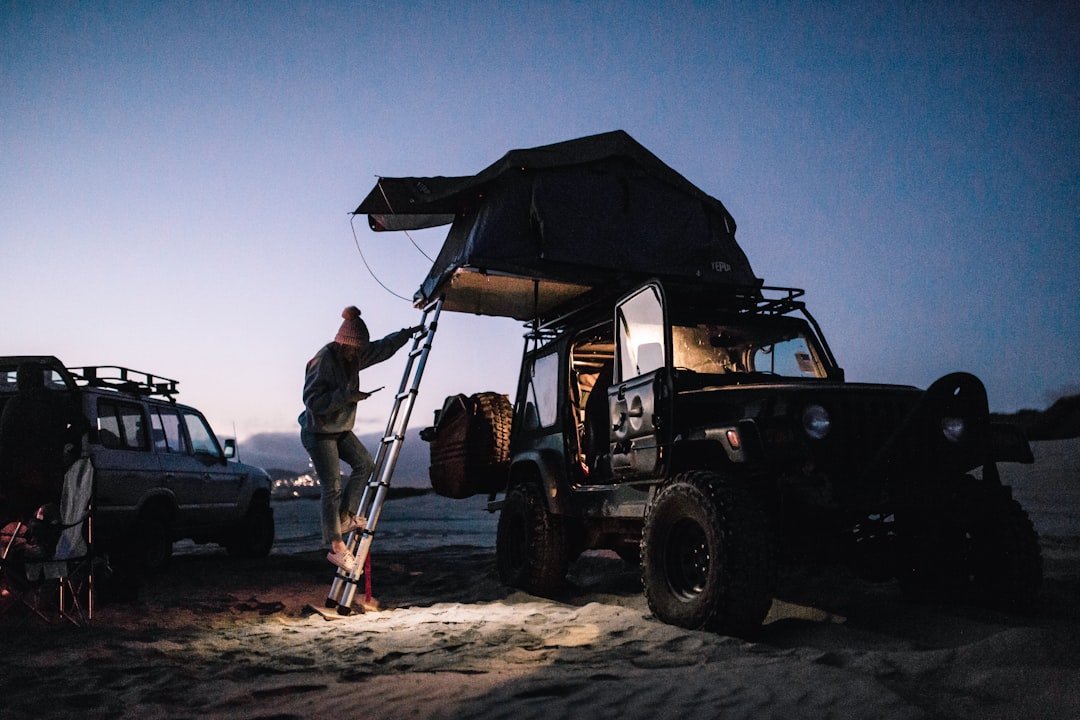
Photo by Luke Bender on Unsplash
What separates rooftop tents under $1,000 from cheap alternatives
The honest answer is construction integrity at every touchpoint. Entry-level RTTs routinely use 190D or 210D polyester for the tent body - the same fabric weight found in budget ground tents. Mid-tier models step up to 280D-320D ripstop polyester or canvas-poly blends that resist UV degradation, abrasion, and repeated packing without delaminating at the seams after a single season of regular use.
Four areas show the clearest and most consequential difference:
Fabric weight and waterproofing. A 280D or heavier shell paired with a rainfly rated at 2,000mm hydrostatic head is the functional floor for reliable all-weather performance. Rainfly ratings below 1,500mm will wet through in sustained rain - not occasionally, but predictably. This is a simple spec comparison: find the number in the product listing or manufacturer page and measure it against that threshold before making a decision.
Mattress density. Budget RTTs typically ship with foam that compresses quickly under regular use. Mid-tier options step up to thicker foam options, sometimes incorporating a memory foam layer. The Yakima SkyRise HD includes a memory foam mattress with a removable cover - a practical feature that cheaper tents rarely offer. A non-removable mattress cover absorbs humidity, body oils, and trail mud over multiple seasons with no remedy short of replacement.
Zipper quality. YKK zippers are the benchmark. Entry-level tents routinely cut costs here, and the failure mode is predictable: separating teeth at stress points within twelve months of regular use. Mid-range models justify part of their price premium through better zipper sourcing - it is an unglamorous spec that dramatically affects real-world longevity.
Pole and hinge systems. Cheaper softshell RTTs use fiberglass poles that flex excessively in wind and can crack in sub-freezing temperatures. Mid-range models transition to aluminum poles with better joint tolerances. On hardshell variants, steel or aircraft-grade aluminum hinge struts replace the plastic-heavy articulation hardware that fails under sustained UV stress.
Here is a direct comparison across price tiers:
| Feature | Entry-level (under $600) | Mid-range ($600-$1,000) |
|---|---|---|
| Shell fabric weight | 190D-210D polyester | 280D-320D ripstop/canvas blend |
| Mattress thickness | 1.5-2 inch foam | 2.5-3 inch with memory foam option |
| Rainfly HH rating | 1,000-1,500mm | 2,000mm+ |
| Zipper quality | Generic sourced | YKK or equivalent |
| Pole material | Fiberglass | Aluminum |
| Typical warranty | 1 year | 2-3 years |
| Seasonal rating | 3-season | 3-4 season |
The warranty gap matters beyond customer service: a brand that offers two or three years on an RTT is making a statement about expected product lifespan that a one-year warranty policy does not. Manufacturer confidence in construction quality shows up in warranty terms before it shows up in marketing copy.
Roof rack compatibility and weight limits for rooftop tents under $1,000
Before ordering any RTT, pull your roof rack’s dynamic weight rating - not the static rating. Dynamic (also called moving) load capacity is what applies when the vehicle is in transit with the tent mounted. Static capacity covers only a parked, stationary load. These numbers differ by design, and the dynamic figure is the one that actually governs a mounted RTT on the highway.
Most factory roof racks carry dynamic ratings of 165-220 lbs. A mid-range softshell RTT typically weighs 100-130 lbs, which leaves reasonable margin even when you account for the occupant load added while stationary at camp. Hardshell RTTs in this price tier run 120-160 lbs given the added shell material.
Crossbar spread compatibility is the other critical dimension. RTTs specify a minimum and maximum crossbar spread - commonly 24 to 45 inches - and the mounting feet must span at least two bars loaded within that range. If your existing crossbars are too narrow, the tent loads unevenly and the mounting hardware experiences stress concentrations that loosen progressively over hundreds of highway miles.
Yakima and Thule both publish detailed fit guides and verified compatibility tables for their crossbar systems. Before assuming your current setup works, check the crossbar manufacturer’s own load specification documentation rather than relying on RTT product listing descriptions, which sometimes omit compatibility caveats to keep the page simple.
If your crossbars use a proprietary slot profile - common on Smittybilt racks and many aftermarket bed rack systems - the 815118 Tent Mount Fit Kit Compatible with Smittybilt Tent Rails provides the hardware to adapt tent mounting flanges to rail-style channels. Include the cost of a quality fit kit in your total system cost before you reach checkout.
For a deeper look at which vehicle platforms offer the strongest native rack compatibility - a core consideration before committing to any roof-mounted sleep system - the guide on how to pick an overlanding vehicle on a tight budget walks through this by platform with practical specifics.
Hardshell vs. softshell: which type makes sense at this price point
At the $600-$1,000 tier, you will find both hardshell clamshell designs and traditional fold-out softshell RTTs. The tradeoff is not cosmetic - it is deployment time, aerodynamic drag, interior sleeping area, and what you actually get for the money at each design approach.
Softshell RTTs in this price range offer the stronger value proposition in terms of sleeping space per dollar spent. A mid-range softshell in the $700-$900 bracket typically sleeps two adults comfortably, with a full-height interior and a 2.5-3 inch mattress. Setup takes 2-5 minutes once you have a few deployments of practice. The penalties are aerodynamic drag on highway drives and a longer setup routine compared to a hardshell.
Hardshell RTTs at the same price point are almost always sized for one person or a tight two, because the rigid clamshell shell costs more to manufacture per square foot of sleeping area than a folding fabric design. The payoff is 30-45 second deployment by unlatching and pushing open, plus dramatically lower aerodynamic drag when closed and driving. For overlanders who cover long highway distances before reaching trailheads, that drag reduction translates to a real and ongoing fuel cost advantage.
The general recommendation for budget overlanders: if your trips are primarily short highway drives followed by multi-night trail camping, a softshell at this price gives you more tent for the same budget. If you regularly cover 200-400 highway miles to reach access points, a hardshell warrants serious consideration even if the sleeping footprint is modestly smaller.
One detail that goes unstated in most product listings: hardshell RTTs at the sub-$1,000 level sometimes ship with thinner mattresses than softshell counterparts at the same price, because the closed lid profile constrains foam depth without creating a pressure point at the hinge line. Always find the actual stated mattress thickness in the spec sheet - do not rely on product photography, which consistently flatters mattress depth.
The Yakima SkyRise HD: what you actually get at this price point
The Yakima SkyRise HD Heavy Duty 4 Season Rooftop Tent is a rooftop tent positioned at the top of the budget-conscious tier - built to specs that separate it from entry-level competition without crossing into the premium range where brands like iKamper and ARB’s upper product lines operate.
Yakima’s “HD” designation reflects heavy-duty construction and weather resistance. The 4-season rating reflects a design built for genuine all-weather use - a meaningful distinction for exposed sites at elevation where a lighter-built tent may leave occupants awake in sustained overnight gusts.
The memory foam mattress with removable cover addresses the most persistent complaint across the RTT category. A non-removable mattress cover is a long-term hygiene problem with no clean solution when it absorbs moisture and body oils across multiple seasons. The Yakima SkyRise HD’s removable cover can be taken off between trips - which extends effective mattress life and keeps the tent usable for frequent year-round use rather than occasional fair-weather outings.
Interior organization pockets on the SkyRise HD are structured rather than simple netting. They hold items upright when empty and do not collapse flat under the weight of a water bottle, phone, or headlamp. It is a minor line item on a spec sheet that becomes a genuine quality-of-life differentiator across multi-night trips when you are reaching for a headlamp at 2 AM.
Yakima publishes fit compatibility documentation at yakima.com for their bar system lineup. Verify your specific crossbar setup against their fit guide before ordering - their tool gives a definitive answer on whether your current bars work or what hardware changes are needed.
The SkyRise HD is Yakima’s serious-use RTT, and the design philosophy is legible in the specs: 4-season rating, HD construction, and the practical removable-cover mattress all point at a product designed for regular, sustained use rather than occasional fair-weather deployment. For a budget overlanding build, that orientation matters.
How to mount a rooftop tent: step-by-step installation
Mounting an RTT is not complicated, but skipping steps creates problems on the trail when vibration works at improperly tightened hardware across hundreds of miles.
-
Verify your crossbar dynamic load rating. Pull the documentation for your specific bars - not the vehicle roof rating, which is a separate and often different number. Most RTTs in this price range weigh 100-150 lbs. Your bars need to carry that weight plus any occupant load when stationary at camp.
-
Confirm crossbar spread against the tent’s mounting foot specifications. The tent manual will state a minimum and maximum foot spread. Position your crossbars to fall within that range and center the load as symmetrically as possible across both bars to avoid uneven stress distribution.
-
Install a fit kit if your rail system requires one. If your crossbars use a proprietary slot profile - Smittybilt rails and various aftermarket bed rack systems are the most common cases - the 815118 Tent Mount Fit Kit provides the hardware to bridge tent flanges to rail channels. Do not force a non-matching flange into a rail slot and expect it to hold.
-
Determine ladder orientation before lifting the tent. Rear deployment works for most truck beds and full-size SUVs. Side deployment suits shorter-wheelbase vehicles where rearward overhang is already at its practical limit. Decide this before you lift the tent onto the bars - repositioning a 120-lb structure after it is up is awkward and risky.
-
Torque all mounting hardware to manufacturer specification. Hand-tight is not adequate for highway use. Yakima specifies torque values in their installation documentation for bar and tower systems. Use a torque wrench and follow the specified values - under-torqued hardware loosens with use and becomes a real problem after that.
-
Test the tent fully at home before your first trip. Open and close it completely, extend the ladder all the way, and run all zipper paths in both directions. Treat any stiff zipper sections with zipper lubricant before they become a problem in the dark at 9,000 feet. The Expedition Portal community (expeditionportal.com) maintains active threads on RTT maintenance and common setup issues worth reviewing before your first deployment.
-
Perform a physical shake test before every drive. With the tent closed and latched, push and pull the unit firmly in all lateral directions. Any rocking beyond the normal flex of the crossbars themselves indicates loose mounting hardware or a spread mismatch. Correct it before highway use, not after.
Common mistakes to avoid when buying a rooftop tent under $1,000
The mid-range RTT market has enough legitimate product options that the biggest purchase mistakes are almost never about buying a defective tent - they are about skipping compatibility homework and underestimating total system cost going into the purchase.
Buying before confirming rack compatibility. The most expensive common error. An RTT that arrives and cannot mount to your existing crossbars forces a rushed purchase of new hardware at retail price, under time pressure before a planned trip. Confirm crossbar spread, T-slot or clamp compatibility, and dynamic load rating before you add anything to a cart. This takes twenty minutes and prevents a frustrating and costly situation.
Treating the RTT weight as the entire roof load. Your vehicle roof has a dynamic load rating. Your crossbars have their own rating, sometimes lower than the vehicle roof’s. The RTT adds its weight to any existing rack accessories - awnings, lights, gear bags secured to the bars. Run the combined weight against both the bar rating and the vehicle roof rating before assuming you have adequate margin.
Accepting a “4-season” claim at face value. Four-season is not a standardized certification in the RTT industry the way EN 13537 applies to sleeping bags. Some brands use the term to mean their tent handles three-season conditions with a modest winter margin. Others mean continuous use in sustained sub-zero temperatures. The objective specs - shell fabric weight, rainfly hydrostatic head rating, pole material and diameter - give you a basis for comparison that a marketing claim does not. Read the numbers, not the label.
Ignoring ladder angle relative to your typical terrain. Most RTT ladders deploy at a fixed angle, usually between 65 and 75 degrees from horizontal. On a sloped campsite or when parked on uneven ground, that fixed geometry becomes awkward or marginally stable. Adjustable-leg ladders exist but are uncommon under $1,000. Know your typical campsite terrain and check owner reviews that specifically mention this concern before writing it off as minor.
Forgetting fit kit costs in the build budget. A mounting fit kit is a non-optional line item if your rack requires one. Including a $30-$80 kit in your planning prevents the surprise of a tent that is technically compatible with your bars but has no way to actually fasten down without additional hardware.
Optimizing for tent weight over mattress thickness. Some buyers prioritize the lightest RTT in this price range to reduce fuel economy impact. Over a multi-night trail trip, the difference between a 2.5-inch memory foam mattress and a 1.5-inch closed-cell foam pad compounds every single night. Sleep quality on a long backcountry trip is a genuine safety variable. Weight matters, but mattress quality earns its weight.
Frequently asked questions about rooftop tents under $1,000
Are mid-range RTTs durable enough for year-round use?
Mid-range RTTs with robust construction are credibly usable across three full seasons without meaningful compromise on performance. Genuine four-season winter use - sustained sub-freezing temperatures, significant snow load, multi-day wind exposure at elevation - requires scrutiny of each specific model’s construction specs rather than blanket trust in a “4-season” marketing label. The Yakima SkyRise HD is designed for heavy-duty and cold-weather use, but extreme winter performance should be cross-referenced against owner reviews from users in comparable climates before depending on it for serious high-altitude or arctic-margin conditions.
How much should I budget for a complete RTT system beyond the tent itself?
Budget for crossbars if your vehicle does not have a compatible setup already - entry-level Yakima or Thule crossbar systems are available for most common platforms, with truck bed rack systems running higher. Add the cost of a fit kit if your rail system requires one. A complete mid-range RTT system - tent, crossbars, and mounting hardware all included - can add meaningfully to the total beyond the tent price alone. Knowing that full number before you start shopping prevents the frustration of a purchase that was not actually within your real build budget, which is the fastest way to make a compromise you regret.
What is the actual fuel economy impact of running a rooftop tent?
Aerodynamic drag from a softshell RTT at highway speeds is a genuine and measurable operating cost. Owner-documented real-world data consistently shows 5-10% reductions in fuel economy at sustained highway speeds with a softshell RTT mounted. Hardshell RTTs reduce this penalty substantially when fully closed, with most owner reports showing 3-5% impact. The exact figure scales with vehicle frontal area, highway speed, and prevailing wind conditions. For a truck or large SUV driving 300 miles to a trailhead, a 7% fuel economy reduction on that highway run is a real dollar figure to price into your trip cost alongside the purchase decision itself.
Can I leave a rooftop tent mounted year-round without causing problems?
Mechanically, yes - the hardware is designed for permanent installation. Practically, there are real tradeoffs worth evaluating. Continuous mounting means continuous aerodynamic drag on every commute and errand run, not just trail drives. UV exposure to the shell fabric accumulates even under a storage cover and accelerates fabric degradation over multiple years. Standard parking structure clearance of 7-8 feet becomes restrictive with most RTTs adding 8-14 inches of total height. For a dedicated trail rig that never sees urban parking structures, permanent mounting is a reasonable and common choice. For a dual-purpose daily driver, that convenience has to be weighed honestly against the cumulative fuel and UV costs.
The mid-range RTT tier is where the product category stops being a novelty purchase and starts being a genuine, reliable sleep system. Better fabric, a real mattress, quality zippers, and proven mounting compatibility mean you are not constantly working around your gear on the trail. The Yakima SkyRise HD represents exactly that step up - a tent built to material specifications that hold up across seasons rather than specifications chosen to hit a retail price floor.
Do the compatibility work before you buy. Confirm your rack’s dynamic rating, measure your crossbar spread, and determine upfront whether you need the 815118 Tent Mount Fit Kit to complete the install correctly. Getting those details sorted before the tent ships is far simpler than working through them the afternoon before a planned trip.
If this guide saved you time or helped clarify your RTT decision, bookmark it or pass it to someone else working through the same buy - the pre-purchase compatibility checklist alone prevents most of the expensive mistakes.
Related reading
- How to pick an overlanding vehicle on a tight budget - platform-specific roof rack compatibility is a foundational factor before committing to any roof-mounted sleep system
- Winter overlanding: cold weather camping prep on a budget - extends the 4-season RTT conversation into a full cold-weather build and layering system