Best Rooftop-Tent Mattresses and Bedding Upgrades
This post contains affiliate links. As an Amazon Associate, I earn from qualifying purchases at no extra cost to you.
The stock foam pad that ships inside most rooftop tents is a placeholder, not a sleep solution. RTT manufacturers optimize for packed thickness, shipping weight, and bill-of-materials cost. Sleep quality is a secondary concern at best. So most stock pads arrive somewhere between 1.5 and 2.5 inches thick, compress under adult body weight within the first few trips, and offer negligible insulation against the cold aluminum or steel platform sitting beneath your back.
After two or three nights in below-50°F conditions, this problem becomes obvious. You wake up stiff and cold, wondering why you paid $700 to sleep worse than you do at home. The bedding is almost always the culprit - and the fix is cheaper than you’d expect.
A well-chosen sleeping pad, the right sheets, and a packable insulating blanket turn your rooftop tent into something genuinely comfortable across three seasons. This guide covers what to replace, what to add, and exactly how to layer the system. One principle anchors everything: the pad goes first. No amount of warm blankets compensates for cold conduction from below. Once you understand that, the rest of the decisions follow logically.
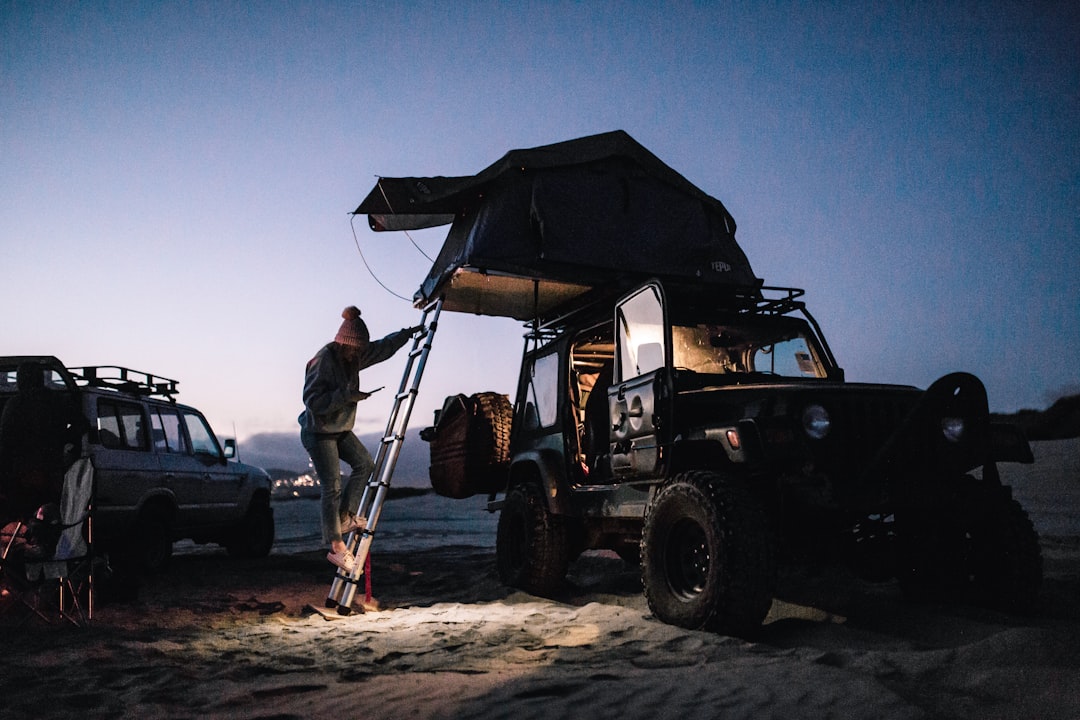
Photo by Luke Bender on Unsplash
Why Your Rooftop Tent Mattress Is the Weakest Link in Your Sleep System
Two physical properties determine how well a sleeping pad performs: support and R-value. Support determines whether the surface holds your spine in a neutral position under load without bottoming out by 3 AM. R-value is the standardized measure of a pad’s thermal resistance - the outdoor industry adopted the ASTM F3340 standard for sleeping pad R-value testing in 2019, giving consumers a consistent measurement across brands for the first time. Values run from R1 (summer use only) to R7+ (expedition-rated sub-freezing performance). Most unrated RTT stock foam pads would land below R2 if measured.
Cold from below is a more efficient heat thief than cold air above you. Your sleeping bag handles air-side cold. Your pad handles conductive cold from the tent platform. A thin, unrated foam slab sitting on a metal tent floor draws body heat out of your back faster than a 20°F sleeping bag can replace it. RTT campers who feel cold even when their bag is rated well below the ambient temperature are almost always experiencing pad failure, not bag failure.
Support matters, but the rigid, flat platform of a rooftop tent is already a better base than most ground-camping conditions. Even a modestly thick pad provides good spinal support on a clean flat surface. This is an underappreciated RTT advantage: you need less foam thickness for support than a backcountry ground sleeper, which means a thinner, lighter, high-performance pad works well where it might feel insufficient on rocky terrain. The priority order is insulation first, support second.
One RTT-specific factor that home bedding doesn’t account for is condensation. Rooftop tents accumulate moisture on interior surfaces overnight, particularly at the ceiling and walls. Good bedding resists moisture absorption, dries quickly between uses, and doesn’t trap humidity against your skin overnight. These factors shape sheet and blanket selection more than pad selection, since quality sleeping pads use nonabsorbent outer shells almost universally.
Rooftop Tent Mattress Types Compared: What Actually Works
Three categories dominate the sleeping pad market relevant to RTT builds: closed-cell foam, self-inflating foam-air hybrids, and ultralight insulated air pads. Each trades off differently on cost, packed size, warmth, and durability.
| Type | R-Value Range | Packed Size | Durability | Best RTT Use Case |
|---|---|---|---|---|
| Closed-cell foam | R2 - R4 | Bulky (rolls or folds flat) | Excellent, puncture-proof | Budget primary pad, cold-weather base layer |
| Self-inflating (foam + air) | R2 - R5 | Moderate (folds) | Very good | Three-season all-rounder, solid support |
| Ultralight insulated air | R4 - R7+ | Compact (stuff sack) | Good with care | Cold-weather and shoulder-season priority pick |
Closed-cell foam is the most durable and lowest-maintenance option. It never deflates, resists punctures completely, and costs the least of any category. The tradeoff is bulk: a full-length closed-cell pad doesn’t compress and takes up meaningful volume inside a low-headroom tent. It works best as a base layer under a thinner air pad in cold conditions, combining both types’ strengths into a highly insulated and puncture-protected stack.
Self-inflating pads draw air passively into a foam core as you unroll them, requiring only minor top-off inflation. They sit in a practical middle ground: more comfortable than closed-cell foam, more puncture-resistant than pure air pads, and foldable to a manageable size. For three-season RTT camping where you want one versatile pad that handles varied conditions without fuss, this category is the pragmatic choice.
Ultralight insulated air pads deliver the best R-value per pound and per centimeter of packed thickness on the market. According to REI’s sleeping pad guide, insulated air pads trap air within baffled chambers filled with synthetic or down insulation, preventing the convective heat loss that plagues uninsulated air chambers. This is what drives R-values above 4 without requiring heavy foam. In RTT use, where you sleep on a flat, clean surface rather than rocky ground, puncture risk is substantially lower than in backcountry conditions, which tips the durability tradeoff favorably.
The Best Rooftop Tent Mattress Upgrade: Sleeping Pad Performance
The Therm-a-Rest NeoAir XTherm NXT MAX Ultralight Camping and Backpacking Sleeping Pad, Neptune, Regular Wide is a well-regarded insulated air pad that adapts well to rooftop tent use. The Regular Wide sizing is a meaningful advantage when you’re sleeping on a fixed platform where you can actually stretch out, rather than compressed inside a mummy bag on a backcountry trail.
Therm-a-Rest publishes its R-values under ASTM F3340. As documented on Therm-a-Rest’s R-value page, the XTherm line carries an independently tested R-value rating. For three-season overlanding from late spring through early fall, that thermal headroom means you can use a lighter blanket on top without compensating with a heavier sleeping bag. The thermal margin also buffers against unexpectedly cold nights - a common scenario at elevation where temperatures can swing significantly between sunset and early morning.
The pad’s insulated construction is designed to help manage body heat and suppress convective air movement. For side sleepers who spend time near the pad perimeter, consistent coverage across the sleeping surface is a practical benefit rather than a spec-sheet talking point.
Inflation takes 10 to 15 breaths or about 3 minutes with the WingLock valve. The valve accepts the NeoAir Micro Pump if you want a no-breath option. Deflation is fast: open the valve, press down on the pad, and it rolls to stuff-sack size in under a minute. Packed, it stores easily in your tent bag alongside a blanket and sheets without the footprint penalty of self-inflating or closed-cell pads.
The main limitation is noise. The internal construction can be audible when you shift position. In a quiet backcountry camp this is noticeable; in a rooftop tent, wind and ambient vehicle and camp sounds typically mask it. Worth knowing before your first night, but not a sleep-disrupting issue for most overlanders.
Cost is the other objection. For a strictly budget-first build, a self-inflating pad or a closed-cell foam pad layered under a thin insulated air pad gets you closer on performance at lower upfront cost. If you’re building a system you intend to keep for years, the XTherm is a worthwhile long-term choice. Minor punctures on insulated air pads can typically be addressed with a field patch kit.
Sheets and Blankets Built for Rooftop Tent Living
Rooftop tent sheets have to check boxes that home bedding doesn’t: they need to handle the condensation environment inside a tent, pack efficiently, breathe across a range of temperatures, and feel comfortable whether the overnight low is 42°F or 68°F on the same trip.
Cotton flannel checks most of these boxes. The Sleep Philosophy Cozy Flannel Sheets 100% Cotton, Queen Sheet Set, 4 Piece includes a fitted sheet that wraps snugly around your sleeping pad and anchors the whole stack against midnight migration. The 100% cotton flannel construction provides a comfortable, napped sleeping surface suited to a range of overnight temperatures.
Cotton flannel does absorb moisture if condensation saturates the tent interior, which makes proactive ventilation a habit worth building. Leave RTT vents cracked even in cold weather. Condensation in a rooftop tent is primarily a ventilation problem, not a temperature problem - a cross-flow through the tent keeps moisture from accumulating on the ceiling and dripping down onto your bedding. When the sheets do get damp, they air-dry quickly in direct sun and wash and dry at home without special treatment.
For the insulating layer, the ROSE FEATHER Down Camping Blanket, Lightweight Outdoor Travel Blanket, Puffy Sleeping Bag Blanket, Waterproof Packable Backpacking Quilt for Camping,Travel, Airplane,Hiking,Picnic, 55’‘x79’’ (Blue) is sized at 55 by 79 inches and designed for outdoor use. Its waterproof construction is suited to environments where condensation and dew contact are likely. In packed form, it stores compactly, which matters when your tent bag is already carrying sheets, a pillow, and personal gear.
Down camping blankets occupy a useful niche for RTT use between a full sleeping bag and a standard synthetic quilt. They drape naturally across your body rather than requiring you to align with a zipper, and can double as a sleeping bag liner in colder conditions. In mild to moderate overnight temperatures, this blanket combined with a quality sleeping pad and flannel sheets covers most three-season camping needs. In colder conditions, layer a sleeping bag rated well below your expected overnight low over or under the blanket and you’ve extended the system’s effective range into late fall.
How to Layer Your RTT Bedding for Any Season
Thinking in thermal stacks rather than individual components is how experienced RTT campers approach this. Here is a repeatable layering sequence that works from April through November, with specific adaptation notes at each step:
-
Evaluate your stock foam. If the foam that came with your tent is structurally intact and not permanently compressed into a hard slab, leave it in place as a pressure-distribution base. It adds minor insulation and gives your sleeping pad a clean, flat surface. If it’s degraded, remove it - you’ll gain headroom, often 2 inches or more in lower-clearance designs.
-
Inflate your sleeping pad to medium-firm pressure. Place the Therm-a-Rest NeoAir XTherm NXT MAX Ultralight Camping and Backpacking Sleeping Pad, Neptune, Regular Wide directly on the stock foam or bare tent floor. Overinflation can reduce comfort and stress the pad structure. Most adult sleepers report best results at medium to medium-firm inflation rather than maximum pressure.
-
Fit the sheet over the pad. The fitted sheet from the Sleep Philosophy Cozy Flannel Sheets 100% Cotton, Queen Sheet Set, 4 Piece pulls over the sleeping pad and anchors the stack. This prevents the pad from migrating overnight and gives you a clean, comfortable contact surface.
-
Add your insulating blanket. The ROSE FEATHER Down Camping Blanket goes on top as your primary insulation layer. Tuck the foot end under the sleeping pad to keep it from bunching when you climb in. In mild overnight temperatures, this layer serves as your primary top-side insulation.
-
Adjust for temperature range. In warm overnight conditions, the flannel sheet alone is often sufficient and the blanket can be stowed. For typical three-season temperatures, the full stack as described handles it. In cold conditions, add a sleeping bag rated well below your expected overnight low, worn on top of the blanket or used as a liner inside it.
-
Manage condensation through the night. Leave the RTT vents open or cracked regardless of ambient temperature. If moisture is forming on the ceiling and dripping, the issue is insufficient ventilation, not unavoidable humidity. A slight cross-draft prevents overnight saturation.
-
Pack systematically after each trip. Deflate the sleeping pad completely before rolling to protect the pad structure during storage. Store the down blanket loosely in a mesh storage bag rather than compressed in a stuff sack for extended periods - compressing down continuously over weeks degrades loft. The flannel sheets can stay folded inside the tent between trips if your RTT design allows it, which cuts setup time at camp.
Common Rooftop Tent Bedding Mistakes That Ruin Your Sleep
The hardware is easy to get right once you understand the thermal logic. The mistakes most overlanders make come from applying home-bedding assumptions to an outdoor thermal system, or from cutting corners on the one component that matters most.
Relying on the sleeping bag to compensate for a bad pad. Sleeping bag temperature ratings are determined under test conditions that include an adequate sleeping pad underneath. The EN 13537 and ISO 23537 standards - which govern most bag ratings - specify a minimum R-value for the pad used during testing. Sleep on an uninsulated pad in a 20°F-rated bag and you will feel cold from below, because the bag was never designed to cover heat loss through the contact surface. Fix the pad first.
Piling on blankets instead of addressing the root cause. Adding weight on top of your body doesn’t stop conductive heat loss from below. Overlanders sometimes carry multiple sleeping bags’ worth of top-side insulation and still sleep cold because the fundamental problem is unresolved. Cold from below requires an insulated pad, not more blankets.
Using cotton bedding in wet, near-freezing conditions. Flannel sheets perform well from 40°F upward. In wet conditions approaching or below freezing, cotton absorbs moisture and loses most of its insulation value. If your camping includes late fall or high-elevation trips where overnight temperatures regularly drop below 35°F in wet conditions, add a synthetic or down sleeping bag as your primary insulation layer and treat the cotton sheets as a comfort liner only.
Closing the RTT over damp bedding. A tent folded shut over wet or damp sheets and blankets will develop mold faster than almost any other camp gear situation. After a dewy or rainy night, leave the tent open for at least 30 to 60 minutes during daylight, or pull the bedding out and drape it in the sun before closing for travel. This single habit prevents the mold and mildew problems that degrade RTT interiors more than any other factor.
Buying bedding sized for a home queen bed without checking your tent dimensions. Many RTTs are marketed as “queen-sized” but the actual interior sleeping surface often runs narrower, particularly in soft-shell designs where folded tent hardware takes up sidewall space. Measure your sleeping platform before ordering sheets. A queen fitted sheet that works in one tent may bunch and pool in another.
Skipping the pillow. Sleep system planning consistently overlooks pillows. A compressible camp pillow has an outsized effect on how you feel in the morning. A stuff sack filled with extra clothing is a functional short-term fallback but not a long-term substitute. Round out the system.
Frequently Asked Questions
Can I replace the stock RTT foam pad entirely with a sleeping pad?
Yes, and for most setups this is the better approach. The stock foam provides modest pressure distribution and minor insulation, but a quality insulated air pad like the Therm-a-Rest NeoAir XTherm NXT MAX Ultralight Camping and Backpacking Sleeping Pad, Neptune, Regular Wide is designed to improve on both. Removing the stock foam gains headroom inside the tent and reduces weight on your roof rack. If you leave the stock foam in place, the sleeping pad goes on top and the combination provides slightly more total thickness. Either approach works. The insulated pad is the primary thermal upgrade regardless of what you do with the stock foam.
What sheet material works best in a rooftop tent?
Cotton flannel is a practical choice for three-season RTT use. The 100% cotton construction provides a comfortable, breathable sleeping surface. The Sleep Philosophy Cozy Flannel Sheets 100% Cotton, Queen Sheet Set, 4 Piece washes and dries normally and holds up over repeated camp trips. In near-freezing or wet conditions, cotton sheets work best as a comfort liner alongside a sleeping bag rather than as a standalone insulation layer.
How do I stop my sleeping pad from sliding inside the tent?
Three factors cause pad migration: a slick tent floor surface, an ill-fitting sheet, and an overinflated pad that rocks under body weight. The most effective fix is a properly fitted sheet that wraps snugly around the sleeping pad, anchoring the entire stack. If the tent floor is smooth aluminum or fiberglass, place a section of rubberized shelf liner underneath the pad - an inexpensive option that eliminates sliding on its own. For the blanket layer, tuck the foot end under the sleeping pad rather than letting it float free on top. Sheet straps or sleeping bag clips add additional anchor points if the fitted sheet alone isn’t enough.
Is a down camping blanket warm enough for cold-weather overlanding?
A down camping blanket works well as the primary top-layer insulation in mild to moderate overnight conditions. Below that threshold, down blankets don’t seal around your body the way a sleeping bag does and lack a temperature rating that accounts for worst-case scenarios. The ROSE FEATHER Down Camping Blanket, 55’‘x79’’ (Blue) pairs usefully with a sleeping bag in colder conditions, functioning as a supplemental liner layer. For shoulder-season camping where lows drop into cold territory, bring a sleeping bag rated well below your expected overnight low and use the down blanket as a supplemental layer on top.
Conclusion
Sleep quality is a functional requirement for overlanding, not a comfort luxury. Bad sleep accumulates into bad decisions on the trail. The rooftop tent bedding stack follows a straightforward logic: the insulated sleeping pad handles cold from below, flannel sheets provide a breathable and comfortable contact layer across a wide temperature range, and a packable down blanket manages three-season top-side insulation without the bulk of a sleeping bag. Build the system in that order, adjust by temperature rather than replacing components, and you get reliable sleep from spring through fall.
If you’re still deciding between tent constructions while planning your sleep system, the hard shell vs. soft shell rooftop tent comparison covers how tent design affects condensation management, interior headroom, and which bedding stacks fit each platform. And if you’re sourcing a used RTT, the used rooftop tent buying guide details what to inspect for mattress and bedding condition before you commit.
If this guide helped you nail down your sleep system, bookmark it for your next gear-planning session or leave a comment below with your tent model and what you’re working with.
Related Reading
- Hard Shell vs. Soft Shell Rooftop Tents on a Budget - How tent construction affects condensation management, interior headroom, and which sleep systems fit each platform.
- Used Rooftop Tent Buying Guide: Inspection Checklist and Fair Price Traps - What to inspect before buying a secondhand RTT, including mattress and bedding condition flags to watch for.