Synthetic vs. Steel Winch Rope: Cost, Safety, and Replacement Intervals
This post contains affiliate links. As an Amazon Associate, I earn from qualifying purchases at no extra cost to you.
The winch gets all the attention - pull ratings, amp draws, gear ratios - and then the first rope or cable that matches your drum diameter gets ordered without a second thought. That’s the wrong priority. The line connecting your winch to a recovery point determines how a pull actually goes: how safely it loads, how clearly it degrades, and what happens if it fails under tension.
For budget overlanders, this decision carries extra weight. You’re likely running the same rope or cable for multiple seasons, so the material you choose affects your upfront spend, your ongoing replacement cost, and your exposure to injury if something lets go under full load. Both synthetic rope and steel cable can handle a well-executed recovery - but they behave differently under stress, degrade through different mechanisms, give different warning signs before failure, and sit at different price points when you account for total cost of ownership. This guide gives you the actual tradeoffs so you can pick what fits your specific build.
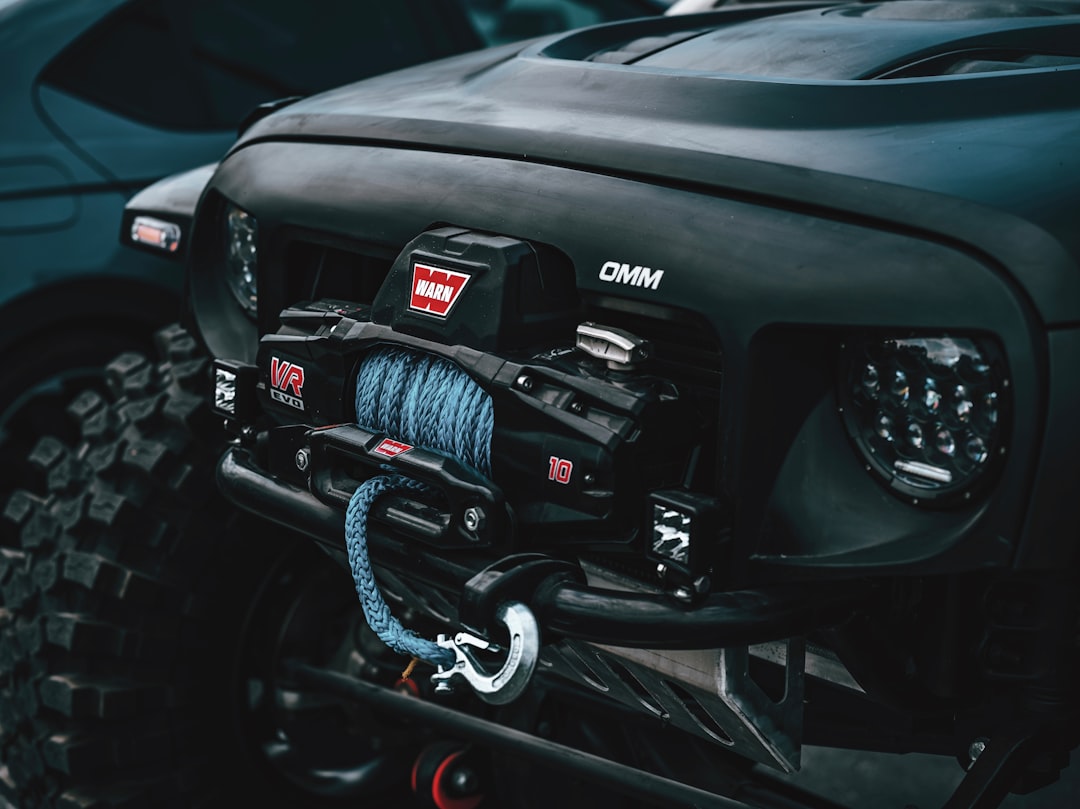
Photo by Egor Komarov on Unsplash
Why the Synthetic vs. Steel Winch Rope Decision Matters From Day One
Steel cable has been the default winch line for decades. Made from multiple strands of galvanized or stainless wire twisted together, it handles sustained high loads with minimal stretch, resists abrasion from rocks and rough terrain better than most synthetic materials, packs onto the drum predictably, and doesn’t UV-degrade. A well-maintained steel cable can outlast a winch motor.
Synthetic rope - made primarily from UHMWPE (Ultra-High Molecular Weight Polyethylene), marketed under names like Dyneema and Spectra - became mainstream in off-road recovery over the past two decades as fiber costs dropped. It offers roughly the same tensile strength as steel at a fraction of the weight, floats in water rather than sinking and potentially wrapping around submerged obstacles, develops no sharp broken-wire “fishhooks” as it wears, and stores almost no kinetic energy when it breaks under load. That last point is where the safety conversation always ends up.
The practical decision hinges on three questions. What does your actual winch use look like - occasional light recoveries or regular technical pulls on demanding terrain? How consistently will you inspect and maintain the line between trips? Where are you running - environments with sharp, sustained rock contact that punishes synthetic fiber, or mixed terrain where steel’s energy-storage failure mode is the bigger exposure?
A winch used three or four times a year on moderate trails runs a very different cost and risk calculation than one pulling weekly on technical terrain. Understanding both materials clearly is the only way to pick what actually fits your situation. If you’re still working through your setup, our guide on how to install a winch on a budget covers mounting, electrical, and fairlead selection - all of which interact directly with your rope choice.
Cost Breakdown: Upfront Price, Replacement Costs, and Long-Term Ownership
Steel cable remains less expensive at the point of purchase for equivalent load ratings and length, and that gap matters when you’re building on a constrained budget.
The WARN 38314 Winch Accessory: Steel Cable Wire Rope with Loop End and Terminal — 5/16” diameter, 100 feet, rated at 9,500 lb, and finished with a loop end and terminal — is a steel cable replacement from one of the most recognized winch brands in off-road.
On the synthetic side, the DAYDOOR Synthetic Winch Rope, 3/8in x 92ft is a high-capacity synthetic option suited to full-size truck winches. For ATV and UTV winches, the WARN 100970 Accessory Kit - Epic Synthetic Rope for ATV and UTV Winch: 1/4” x 50’ is purpose-built for smaller machines and ships as a complete accessory kit, a convenient choice when replacing rope and termination hardware together.
Where the cost math gets more complicated is replacement frequency. Steel cable, properly maintained and never kinked, realistically lasts five to eight years with periodic inspection and occasional lubrication. Synthetic rope typically needs replacement every three to five years with regular use - sooner if stored dirty, left exposed to UV through multiple uncovered summers, or repeatedly contacting sharp rock edges without a protective sleeve. Factored over a full ownership cycle, per-season cost between the two types is often closer than the upfront price suggests.
Hidden costs on each side: steel needs periodic wire rope lubricant to prevent internal corrosion - a small ongoing expense with roughly 20 minutes of maintenance per season. Synthetic doesn’t need lubrication but should be rinsed after muddy recoveries and stored dry to prevent grit from working into the fiber and causing internal abrasion. Steel’s upkeep is more consequential when skipped; internal corrosion can reduce capacity without any visible surface warning, which makes deferred maintenance a quiet risk.
Safety: How Synthetic Rope and Steel Winch Cable Fail Differently
Safety Warning: Never stand in the “kill zone” - the area directly behind or in front of the vehicle along the tension axis, or directly behind an anchor point - during any winch pull, regardless of rope type. Both steel cable and synthetic rope at full load transmit enough energy through fittings, shackles, and anchor hardware to cause severe injury or death if any component lets go. Always place a winch line dampener mid-rope on every pull. Inspect all rigging hardware - shackles, recovery straps, recovery points - before applying load. Leather gloves are required for all rope handling, and bystanders should remain clear of the tension line.
Steel cable under high load stores significant kinetic energy in its twisted, tensioned strands. When steel fails - at a corroded fitting, a stress point from internal strand breaks, or a kinked section running at full load - it releases that energy almost instantly. The snap-back moves fast, and broken wire ends are sharp. The abraded “fishhook” wires that develop on worn or kinked steel are a secondary serious hazard: they penetrate standard work gloves and cause deep puncture wounds when respooling or inspecting by hand.
Synthetic rope stores far less energy because UHMWPE fibers have a fundamentally different elastic behavior - they absorb energy progressively rather than storing it in tight metallic tension. When synthetic breaks at a worn section or damaged fitting, it typically drops away rather than snapping back with force. WARN Industries notes in their synthetic rope product documentation that this reduced stored energy at failure is one of the primary reasons high-performance off-road and professional recovery has shifted toward synthetic over the past decade.
Synthetic rope is not a safe-failure material in absolute terms. Shackles, hooks, and recovery points can still recoil violently even when the rope itself drops clear. Dampener discipline and kill-zone awareness apply regardless of what’s on your drum.
For abrasion resistance, steel wins clearly. Dragging synthetic rope repeatedly across fractured rock edges under load cuts fiber layers and shortens service life. A rope protector sleeve at high-abrasion contact points is essential for synthetic on rocky terrain - not optional. Samson Rope’s synthetic rope technical resources include detailed inspection guidance on abrasion patterns and UV degradation that applies directly to off-road winch rope evaluation and is worth reviewing before your first inspection.
Replacement Intervals for Synthetic vs. Steel Winch Rope
Neither rope type carries a fixed manufacturer replacement schedule. Retirement is based on condition, not calendar alone. The consistent guidance from winch manufacturers and experienced recovery operators is: inspect before every significant outing, and retire at the first sign of meaningful degradation. Do not wait for a visible failure as confirmation that something is wrong.
Inspecting Synthetic Winch Rope
Work through the full length by hand at least once per season and before any major trip. Key retirement triggers:
- Core damage visible through the sheath. Fuzzing, discoloration, or visible fiber loss showing through the outer jacket means the structural core has been reached. Tensile strength has already dropped. Retire the rope before the next pull, not after.
- Flat sections or persistent hard spots. Areas that feel stiffer or have permanently flattened rather than recovering a round profile indicate localized crush damage from spooling under improper tension, or heat damage from contact with exhaust or brake components. A healthy rope should feel consistently round and pliable throughout.
- UV bleaching accompanied by brittleness. Surface-level color fading is cosmetic. UV fading accompanied by a stiffer, less flexible texture in a section indicates deeper fiber degradation where the UHMWPE chains have broken down and tensile strength has dropped meaningfully below rated capacity.
- Kinking or permanent memory. Quality synthetic rope returns to its natural shape when unspooled. Sections that hold a set or kink indicate compromised fiber geometry at that point and should not be trusted under working load.
- Any glazing or melting. Contact with hot metal - brake rotors, exhaust components, or friction from extreme high-speed spooling - can melt UHMWPE fibers. Glazed or shiny sections are structurally failed, regardless of how intact the surrounding rope appears.
Synthetic rope on a truck or SUV winch that sees regular use - several pulls per season over varied terrain - should be evaluated carefully every two years, with most lines needing replacement within four to five years. UV exposure accelerates this substantially. A rope mounted uncovered on an exposed bumper through multiple desert or high-altitude summers will degrade faster than one stored between uses.
Inspecting Steel Cable
Work slowly along the full length in leather gloves.
- Kinks. Any kink is an immediate retirement trigger, not a cosmetic issue to monitor. The internal strand geometry is permanently deformed at a kink, creating a stress concentration that negates rated capacity. There is no field repair for kinked steel cable.
- Broken wires. Feel along the entire length for protruding wire ends. More than a few broken wires in any ten-foot section - especially near fittings or drum-end terminations - warrants replacement.
- Deep corrosion. Surface rust on a lubricated cable is addressable with cleaning and lubricant. Pitting, strand separation, or a rough gritty texture throughout indicates internal corrosion beyond surface treatment. Replace it.
- Birdcaging. Sections where outer strands have expanded away from the core indicate internal failure and are a retirement trigger regardless of the cable’s age.
Well-maintained steel cable can realistically serve five to eight years under regular but not abusive use. The key variables are consistent lubrication and whether it has ever been kinked or aggressively overloaded.
Synthetic vs. Steel Winch Rope: Side-by-Side Comparison
Use this table as a quick-reference decision tool alongside the sections above. The nuance is in the conditions - a single-row answer rarely captures the full picture.
| Factor | Synthetic Rope | Steel Cable |
|---|---|---|
| Upfront cost | Moderate to high | Low to moderate |
| Weight | Light | Heavy |
| Snap-back danger at failure | Low | High |
| Abrasion resistance | Moderate (sleeve required on rock) | High |
| UV degradation risk | Yes - significant over seasons | Not a factor |
| Corrosion | None | Requires periodic lubrication |
| Typical replacement interval | 3-5 years with regular use | 5-8 years with maintenance |
| Fairlead compatibility | Hawse or smooth roller | Roller fairlead required |
| Safe to handle bare-handed | Yes - no fishhook wires | No - broken wires cut gloves |
| Floats in water crossings | Yes | No |
| Best suited for | Most overlanders, mixed terrain | Tight upfront budgets, high-abrasion rock |
Two rows deserve extra emphasis. Fairlead compatibility catches budget builders off guard when they buy synthetic rope and discover their existing steel roller fairlead has rough edges or damaged rollers that will abrade synthetic fibers immediately. If your rig came with steel cable and a roller fairlead, factor in a quality aluminum hawse fairlead when calculating the true cost of switching to synthetic. The hardware cost is modest and installation is straightforward, but it’s a real line item.
The floats-in-water row matters more than it looks for overlanders who run seasonal creek crossings. Sunken steel cable can wrap around submerged logs, rocks, and axle components in ways that seriously complicate a recovery. Synthetic staying near the surface is a genuine operational advantage in wet conditions, not just a spec-sheet curiosity.
Common Mistakes Overlanders Make With Synthetic and Steel Winch Rope
Running synthetic rope over sharp rock contact without a sleeve. Synthetic rope dragged across a fractured rock edge under load can cut through fiber layers in a single pull. A rope protector sleeve placed at the contact point is low-cost and extends synthetic rope life substantially on rocky terrain. Skipping it because it slows rigging by 90 seconds is a false economy that results in premature retirement of an expensive rope.
Continuing to run kinked steel cable. A kink is not cosmetic damage to monitor. The internal strand geometry is permanently deformed at that point, and the cable’s rated load capacity no longer applies there. Running kinked steel cable means relying on a line with an unknown reduced capacity at a specific stress concentration point. When you find a kink, the cable comes off the drum.
Skipping the winch line dampener. A purpose-made dampener, a heavy floor mat, or a jacket draped over the rope mid-span provides meaningful snap-back mitigation for both rope types if a shackle or fitting lets go under load. It costs nothing in improvised form and is regularly skipped. Build it into your rigging routine as a non-negotiable step.
Spooling synthetic rope under no tension. Loose spooling creates pressure problems later. When inner layers of loosely wound rope are compressed against each other on subsequent pulls, the crushing damages fiber structure over time. Spool synthetic under consistent light tension and guide it evenly across the drum width rather than letting it pile on one side.
Ignoring cumulative UV exposure on synthetic. Overlanders who leave their winch mounted uncovered through multiple high-UV seasons accumulate sun damage that doesn’t show clearly on visual inspection until tensile strength has already dropped significantly. Track when the rope was installed and what conditions it has been exposed to - not just how many pulls it has logged. A rope with four desert summers and active use is near end-of-life regardless of how it looks on the drum.
Running steel cable through a hawse fairlead. Steel cable requires a roller fairlead to manage side-to-side and vertical departure angles without damaging the cable or fairlead surface. Running steel through a hawse fairlead designed for synthetic will damage both. Conversely, synthetic rope works well through either fairlead type when surfaces are smooth and undamaged - a practical operational advantage worth noting when comparing total system costs.
Frequently Asked Questions
Can I switch from steel cable to synthetic rope without replacing my winch?
In most cases, yes - but verify two things first. Inspect your drum surface for burrs or rough metal that could cut synthetic fibers over time, and confirm line diameter. Synthetic of equivalent breaking strength is typically slightly smaller in diameter than steel, so it generally fits the same drum. The larger consideration is your fairlead: synthetic needs a hawse fairlead or a smooth, undamaged roller fairlead to avoid fiber abrasion at the line entry point. A steel roller fairlead with rough edges, damaged rollers, or corrosion will abrade synthetic quickly. Inspect and clean the fairlead before converting, or replace it with an aluminum hawse fairlead. The rope swap itself is mechanically straightforward.
Is synthetic rope safe to use in water crossings?
Synthetic rope floats, which is a genuine practical advantage - it stays near the surface rather than sinking and potentially wrapping around submerged obstacles or vehicle components the way steel cable can. For overlanders who regularly run wet terrain and creek crossings, synthetic is the better rope choice on this dimension. Mud and grit packed into synthetic rope accelerate internal fiber abrasion over time, so rinsing thoroughly after any wet or muddy recovery is not optional. Rinsing also keeps the rope surface clean enough for accurate visual inspection on subsequent outings.
How do I know when my winch rope or steel cable is no longer safe to use?
For synthetic: run the full length slowly through your hands and feel for sections that are flat, stiff, or harder than the surrounding rope. Look for fuzzing visible through the outer sheath, discoloration, or sections that won’t return to a round profile. Any glazing or obvious melting is a retirement trigger. For steel: work slowly in leather gloves and feel for protruding wire ends, any kink at all, and sections that feel rough or gritty rather than smooth. A single kink is a retirement trigger - no exceptions. Beyond inspection, factor in age and exposure: synthetic past five years of active use in high-UV environments, or steel past eight years with deferred lubrication maintenance, should be treated as end-of-life and replaced proactively.
Which Rope Wins for a Budget Build?
For most budget overlanders, synthetic rope is the right call. It is safer at failure, less hazardous to handle, more readable in its degradation, and competitive with steel over a full ownership cycle once replacement intervals and maintenance requirements are factored in. The case for steel comes down to two legitimate scenarios: you need the lowest possible upfront cost right now to get a functional winch system running, or you’re running terrain so abrasive that frequent synthetic replacement makes the long-term economics genuinely worse than steel with a sleeve.
Whatever ends up on your drum, the real risk isn’t the material - it’s running either type past its service life because inspection was deferred or replacement was pushed back a season. Inspect your line before every significant outing, know the retirement triggers for your specific rope type, and budget for replacement as a routine maintenance cost rather than an unplanned emergency.
Before your next trail day, check out the Best Budget Winch Accessories and Recovery Kit Add-Ons to pair your rope with the dampeners, shackles, and tree savers that make a complete, safe recovery system.
Found this useful? Bookmark it before your next build session and drop a comment below if you’re deciding between rope types for a specific winch or terrain setup.