Best portable camp stoves and cooking systems for overlanders compared
This post contains affiliate links. As an Amazon Associate, I earn from qualifying purchases at no extra cost to you.
Most overlanders overspend on cooking gear in one of two ways. They buy a backpacking stove that cannot feed more than one person, or they buy a full slide-out kitchen before they know how they actually eat on the trail. Both mistakes cost money, and both are avoidable once you understand what a camp stove has to do in a vehicle-based setup.
My position is simple: for most budget builds, the best cooking system is a modest two-part setup. You want one fast, reliable stove for boiling water and quick meals, plus a backup fuel path that does not depend on the same canister supply. Everything else, including grills, tables, and storage boxes, is optional and can be added as your trips demand it.
This guide compares the main stove types, puts two specific stoves head to head, and gives you a decision framework so you can buy once. It is based on manufacturer specifications, safety guidance, and the compatibility and cost tradeoffs that matter when your pantry rides in a truck bed or a cargo area instead of a backpack.
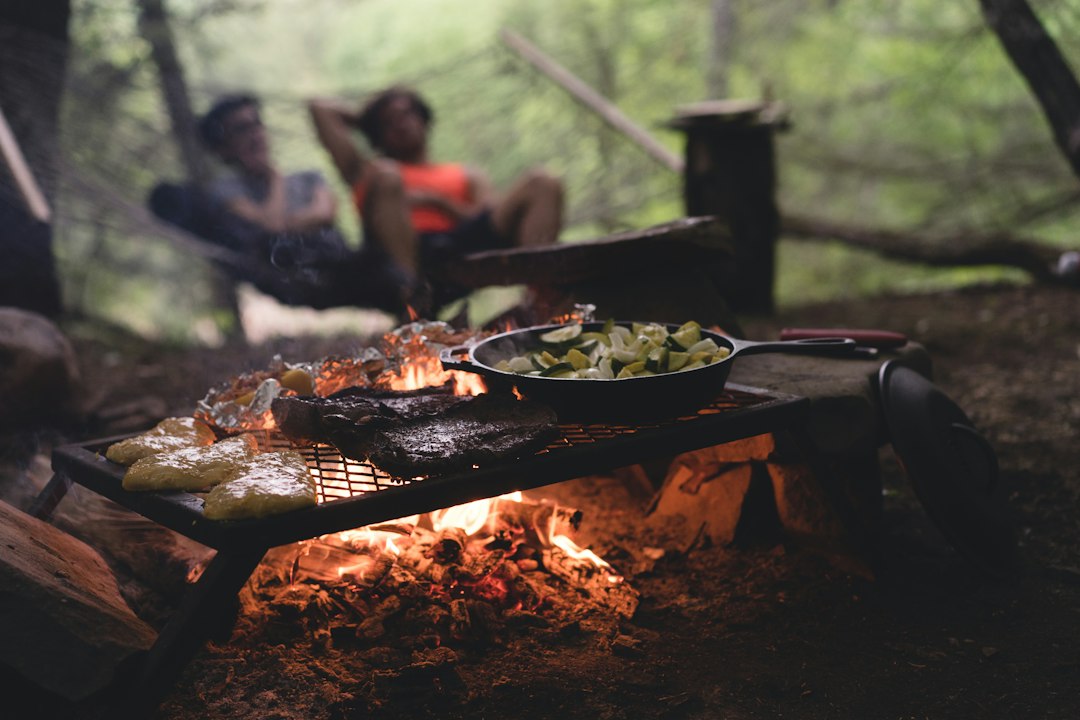
Photo by Myles Tan on Unsplash
What to Look for in Portable Camp Stoves
Before comparing models, decide what job the stove has to do. Overlanding cooking sits between car camping and backpacking, and that middle position changes the priorities.
Fuel availability on your route
Fuel is the first constraint. Isobutane-propane canisters are easy to find in the United States, but they get harder to source in remote regions and in other countries. Small 1 lb propane cylinders are cheaper and nearly universal, while liquid fuels like white gas are sold in small towns but not in every gas station. If your trips run past the last town with an outdoor store, choose a stove whose fuel you can resupply or carry in sufficient quantity.
Cold-weather and altitude performance
Canister stoves lose pressure as temperatures fall, because the fuel vaporizes less readily. Manufacturers generally recommend keeping canisters warm in cold conditions and using blended fuel for shoulder-season trips. If you camp near freezing or at elevation regularly, a regulated stove or a liquid-fuel system is a safer pick than a basic unregulated burner.
Wind handling
Wind wrecks cooking efficiency faster than any other factor. Stoves with built-in windscreens or enclosed burner designs use less fuel in breezy conditions, which matters when you are rationing fuel on a multi-day trip. Open burners need a separate windscreen, and you must keep that screen from trapping heat against the fuel container.
Pack size and vehicle storage
Your vehicle has limits even though you are not carrying everything on your back. Payload and cargo space are real constraints, particularly on smaller trucks and SUVs. If you have not checked your numbers yet, our guide on how to determine payload capacity and safe weight limits for your vehicle shows how to do it before you load a kitchen box with fuel, water, and cookware.
Cooking style
A stove that boils water well is not automatically a stove that cooks well. Fast-boil systems are built for dehydrated meals, coffee, and soups. If you want to sear meat, simmer sauces, or fry breakfast for four, you need a wider burner and a pan-friendly platform. Be honest about how you cook before you shop, because that single decision eliminates half the market.
The Best Portable Camp Stoves by Type
Every stove falls into one of four families. Each has a clear job, and each has a tradeoff you should accept with open eyes.
Integrated canister stoves
These are all-in-one systems where the burner, pot, and heat exchanger lock together. They boil water quickly and use fuel efficiently, which makes them excellent for solo travelers and couples who eat a lot of freeze-dried food, oatmeal, and coffee. The main tradeoff is versatility. The pots are narrow and tall, and they are poor at frying or simmering delicate food.
Propane two-burner stoves
The classic suitcase-style stove is the workhorse of car camping. It offers two burners, real flame control, and compatibility with standard cookware. It runs on 1 lb propane cylinders or, with an adapter hose, a refillable tank. For families, group trips, and anyone who actually cooks dinner, this is the practical choice. The tradeoff is size. It needs a flat surface, it is bulkier than a canister system, and it is a poor fit for ultralight travel.
Liquid-fuel stoves
White gas and multi-fuel stoves perform well in cold weather and at altitude, and the fuel is cheap per ounce. They are also more demanding. You need to prime them, maintain them, and carry a fuel bottle safely. For most budget overlanders, liquid fuel is overkill unless you regularly camp in winter or travel internationally where canisters are hard to find.
Wood-burning stoves
Wood-burning stoves use twigs and small sticks, which removes fuel cost and resupply worries in forested areas. Some models also convert heat into electricity for charging small devices. The tradeoffs are cooking time, sooty cookware, and legality. Fire restrictions during dry seasons often ban wood-burning devices, and some jurisdictions treat them differently from gas stoves with a shutoff valve. Check current rules with the land manager before relying on one.
Safety warning: carbon monoxide and fire. Never cook inside a tent, a closed vehicle, a rooftop tent, or any enclosed space. Gas and wood stoves produce carbon monoxide, which can reach dangerous levels quickly in a confined space. The CDC explains the risks of carbon monoxide poisoning, and the Consumer Product Safety Commission offers further guidance on fuel-burning equipment. Carry a battery-powered carbon monoxide alarm if you ever sleep near a cooking area. Keep fuel away from heat, check hoses and regulators for leaks, and carry a fire extinguisher within reach. If you have not chosen one yet, our vehicle fire extinguisher guide covers what to carry and where to mount it.
Jetboil Flash vs BioLite CampStove 2+: Two Very Different Philosophies
Two of the products worth considering represent opposite ends of the portable stove spectrum. The first is a fast, integrated canister system. The second is a wood-burning stove that doubles as a charger. They do not compete directly, which is exactly why comparing them is useful.
Jetboil Flash 1.0L
The Jetboil Flash 1.0L Fast Boil Stove for Camping & Backpacking, Mountainscape is a fast-boil stove aimed at heating water for drinks and simple meals. Check the listing for current boil-time claims, fuel compatibility, and included components, since models can change over time.
Who it fits: solo overlanders, couples, and anyone whose camp menu is mostly boiling water. If your dinner is dehydrated pasta, instant rice, soup, or oatmeal, and your morning is coffee, this style of stove is hard to beat for the price and packability. It also makes an excellent backup to a larger stove, because it fits in a door pocket or glove-box-sized space.
Where it falls short: the cup is tall and narrow, so frying an egg or searing a steak is awkward at best. You also depend on canister fuel. That is not a problem in most of the United States, but plan ahead for remote trips and cold weather. Keep a spare canister in your kit, and store it away from direct heat inside the vehicle.
BioLite CampStove 2+
The BioLite CampStove 2+ Wood Burning, Electricity Generating & USB Charging Camp Stove, Complete Kit takes the opposite approach. It is a wood-burning stove that generates electricity and offers USB charging. Check the listing for details on battery capacity, output, and included parts, since the kit configuration may vary.
Who it fits: forested-region travelers, long-trip campers who want to reduce fuel costs, and anyone who values the novelty of a stove that also helps keep a phone alive. It is a reasonable choice if you camp in places where dead and downed wood is abundant and fires are permitted.
Where it falls short: it is slower than a pressurized gas stove, it requires you to gather and feed fuel, and it leaves soot on cookware. It is also less useful in treeless terrain like desert and alpine zones, where wood is scarce or collection is restricted. During high fire danger, a wood-burning stove may be prohibited even if a gas stove is allowed. If your power needs are serious, a proper charging system is a better investment than a stove’s output. Our guide to solar power for vehicles covers budget charging solutions that do not depend on a fire.
The honest verdict
If you can only buy one, the Jetboil style is the safer pick for most budget overlanders, because it is simple, fast for boiling, and not dependent on finding wood. The BioLite is a strong second stove for forested trips or for travelers who like redundancy. Pairing the two gives you a gas option and a wood option, so a single fuel shortage or fire restriction does not end your hot meals. Always check local fire rules before using either.
Camp Stove Comparison Table and Decision Framework
The table below summarizes how each stove family performs on the factors that matter most to overlanders. Ratings reflect general design tradeoffs rather than lab testing, so confirm specifics against manufacturer documentation for any model you buy.
| Stove type | Best for | Fuel | Cooking range | Wind handling | Main tradeoff |
|---|---|---|---|---|---|
| Integrated canister (Jetboil style) | Solo or couple, boil-focused meals | Isobutane-propane canister | Narrow; boiling and simple meals | Strong, due to enclosed design | Poor for frying or simmering |
| Propane two-burner | Families, group cooking | 1 lb cylinder or refillable tank | Wide; full skillet cooking | Moderate; needs a windscreen | Bulky; needs a flat surface |
| Liquid fuel (white gas, multi-fuel) | Cold weather, international travel | White gas or multi-fuel | Wide, with good simmer control | Moderate to strong | Priming and maintenance |
| Wood-burning (BioLite style) | Forested trips, backup stove | Twigs and small sticks | Moderate; slower and sootier | Moderate | Fire restrictions; wood supply |
The table gives you the options. The next step is choosing among them. Use the following steps in order, and stop when you hit a clear answer.
- Count your regular diners. If you usually cook for one or two people, an integrated canister stove covers most meals. If you feed three or more, start with a propane two-burner.
- List your five most common meals. If four of them involve boiling water, favor a fast-boil canister system. If they involve frying, searing, or simmering, favor a two-burner.
- Check your coldest likely night. If you camp regularly below freezing, favor a liquid-fuel stove or a regulated canister model and keep canisters warm.
- Check fire rules for your usual destinations. If wood-burning stoves are frequently restricted where you go, treat a wood stove as a bonus, not your primary.
- Set a budget ceiling for the stove and fuel together. Remember that fuel costs accumulate. A stove that is cheap to buy but expensive to feed can cost more over a season.
- Add a backup. Choose a second stove that uses a different fuel path, such as a wood stove paired with a canister stove.
Follow those six steps honestly and the correct choice usually becomes obvious. Most budget travelers land on one of two answers: a two-burner propane stove for the family rig, or a canister boil system with a wood-burning backup for solo and couple travel.
Building a Complete Cooking System Around Your Stove
A stove alone does not make a kitchen. The rest of the system is where overlanders either save money or waste it, and a few accessories matter more than the stove brand.
Cookware that matches your stove
Match your pots and pans to the stove’s burner size. Narrow integrated systems come with their own cup, and you should resist the urge to balance a large pan on a small burner. On a two-burner stove, a single nonstick skillet and one pot with a lid cover most meals. Nesting cookware saves space and protects against rattling on washboard roads.
Fuel storage and handling
Store canisters upright, away from heat, and secured so they cannot roll. Do not leave fuel in a hot cab on a summer day. If you carry liquid fuel, use bottles designed for it, and keep them separated from food and from your electrical equipment. For larger vehicle-fuel storage questions, see our guide to fuel transfer systems and jerry can storage.
Water, cleanup, and cold storage
Cooking uses more water than many beginners expect, because boiling, rinsing, and cleanup add up. Plan for filtering and storage before you plan an elaborate menu. Our guide to portable water filters and storage systems is a good starting point. Cold storage matters too, since fresh food determines whether you need a larger stove at all. Our comparison of off-road refrigeration and cooler solutions covers the range from basic coolers to powered fridges.
Shelter, wind, and the tent question
Your cooking area needs a plan for wind and rain. A tarp, an awning, or the lee side of your vehicle can all work. The Coleman PEAK1 2/3/4/6 Person Premium Weatherproof Backpacking Tent appears in this guide because many overlanders pair a ground tent with a canister setup for short trips away from the vehicle. A tent is a place to sleep and shelter, not a kitchen. Check the manufacturer’s care and safety instructions, keep every stove outside the tent and its vestibule, and keep flame well away from tent fabric. Fire safety guidance also applies to the nylon fabrics used in most tents, so a stove should sit on bare, level ground at a safe distance.
If you are weighing ground tents against a rooftop setup for your build, our comparison of hard shell vs soft shell rooftop tents on a budget explains the tradeoffs.
Leave no trace
Cook on durable surfaces, pack out food scraps, and keep stoves off vegetation. The Leave No Trace Center’s guidance on minimizing campfire impacts recommends using a stove for cooking whenever possible, because stoves leave far less impact than open fires. That is a strong reason to keep a reliable stove in your kit, even if you enjoy a campfire in the evening.
Common Camp Stove Mistakes and Problems to Avoid
Most stove failures in the field trace back to a handful of avoidable errors. Here are the ones that cost overlanders the most meals, money, and safety.
Cooking in an enclosed space. This is the most dangerous mistake. A cold, rainy night tempts people to cook in a vestibule or inside the vehicle, but carbon monoxide builds up quickly. Cook outside, every time, and use a windbreak instead of walls.
Skipping a leak check. Before every trip, connect the fuel source and apply soapy water to hoses and fittings. Bubbles mean a leak. Replace any worn hose or regulator, and never test for leaks with a flame.
Ignoring cold-weather fuel behavior. Canisters struggle in cold temperatures, and a stove that works at home can sputter at dawn. Keep fuel warm before use, and carry a backup plan for breakfast.
Packing too little fuel. Wind, cold, and group size all raise fuel use. A common problem is running out on day three. Plan fuel by meals rather than days, and carry at least one spare canister or cylinder beyond your estimate.
Buying the wrong stove for the menu. A boil-only system cannot comfortably fry bacon for four, and a two-burner is excessive for coffee and instant oatmeal. Match the stove to what you cook most often.
Overlooking fire restrictions. Rules change seasonally and vary by land manager. Check with the agency before every trip, because a stove that is legal in spring may be restricted in late summer.
Letting soot and debris build up. Dust, spilled food, and ash clog burners and reduce performance. Wipe down and inspect your stove after each trip, and store it in a dust-resistant container. Our guide to protecting your engine from dust and debris explains how fine trail dust gets everywhere, and your kitchen box is no exception.
FAQ
What is the best camp stove for a solo overlander on a budget?
For most solo travelers, an integrated canister system is the most efficient pick. It is designed for boiling water quickly, is compact, and handles wind well thanks to its enclosed design. A Jetboil style stove handles coffee, freeze-dried meals, and soups with very little effort. The main limitation is that it is not designed for frying or simmering, so if you cook real meals regularly, add a small pan and a compact burner, or choose a two-burner stove instead. Buy based on your menu, not on the brand, and keep a spare canister in your kit so a single empty cylinder never ends your hot meals on a remote trip.
Is a wood-burning stove a good primary stove for overlanding?
Usually not. A wood-burning stove makes an excellent backup or supplement, but it should rarely be your only option. Fire restrictions can ban wood-burning devices during dry seasons, and wood is scarce in deserts and above treeline. Wood also cooks more slowly and leaves soot on your pots. A stove like the BioLite CampStove 2+ is most useful in forested regions where collecting dead wood is allowed, and it works best alongside a gas stove. Always confirm local fire rules with the land manager before relying on any open-flame device, and keep water and a shovel nearby whenever you burn wood.
Can I use a camp stove inside my tent or vehicle if it is raining?
No. Every fuel-burning stove, including gas, liquid-fuel, and wood models, produces carbon monoxide, and enclosed spaces let it accumulate to dangerous levels very quickly. Tent fabric also ignites easily. In bad weather, set up a tarp or awning with open sides, cook upwind of your sleeping area, and keep the stove on bare, level ground. If you want to cook through a storm regularly, invest in a proper shelter designed for ventilation and distance from sleeping areas. A battery-powered carbon monoxide alarm is inexpensive insurance whenever fuel-burning gear is anywhere near where you sleep.
How much fuel should I bring for a weekend overland trip?
Plan by meals rather than days. A fast-boil canister stove typically uses a modest amount of fuel for each liter of water, so a couple cooking a handful of simple meals usually needs less than one standard canister, but wind, cold, and extra coffee change that quickly. A reasonable approach is to estimate your total boiling needs, add a buffer of at least 30 percent, and carry one spare canister or cylinder. For a two-burner stove, a 1 lb propane cylinder lasts a limited number of cooking hours, so bring at least two for a weekend with several cooked meals.
Conclusion
The right camp stove is the one that matches your menu, your group size, and your terrain. For most budget overlanders, that means a fast-boil canister stove for everyday simplicity, a two-burner propane stove if you cook for a family, and an optional wood-burning stove as a backup for forested trips.
Your next step is concrete: write down your five most common trail meals, count the people you cook for, and check the fire rules where you travel. Those three answers will point you to a stove in minutes, and they will keep you from paying for gear that your trips never use. Build the kitchen around the stove, test everything in your driveway before you leave, and always cook outdoors with a working carbon monoxide plan.
Bookmark this guide before your next gear order, and leave a comment with the stove setup that has worked on your own builds.
Related reading: